:::::::::::::::::::::::::::::::::::::::::::::::::::::::::::::::::::::::::::::::::::::::::::::::::::::
Yamato Takeru, Yamatotakeru
Prince Yamatotakeru (日本武尊, やまとたける)
(also known as Yamato-dake), originally Prince Ousu (小碓命, おうすのみこと) was a Japanese legendary prince of the Yamato dynasty, son of Keikō of Yamato, a legendary monarch who is traditionally counted as the 12th Tennō or Emperor of Japan. The tragic tale of this impressive figure is told in the Japanese chronicles Kojiki and Nihon Shoki. One of his sons later became Chūai, traditionally counted as the 14th Emperor of Japan.
His historical existence is uncertain but those books date his life to the 4th century AD. Details are different between the two books and the version in Kojiki is assumed to be loyal to the older form of this legend.
According to traditional sources, Yamato Takeru died in the 43rd year of Emperor Keiko's reign (景行天皇43年). The possessions of the dead prince were gathered together along with the sword Kusanagi; and his widow venerated his memory in a shrine at her home. Sometime later, these relics and the sacred sword were moved to the current location of Atsuta Shrine.
Yamato Takeru is believed to have died somewhere in Ise Province. According to the legend the name of Mie Prefecture was derived from his final words. After death his soul turned into a great white bird and flew away. His tomb in Ise is known as the Mausoleum of the White Plover.
A statue of Yamato Takeru stands in Kenrokuen in Kanazawa, Ishikawa.
© More in the WIKIPEDIA !

:::::::::::::::::::::::::::::::::::::::::::::::::::::::::::::::::::::::::::::::::::::::::::::::::::::
Yamato takeru no mikoto
やまとたけるのみこと / 倭建命
Other names:
Ousu no mikoto (Kojiki, Nihongi), Yamatooguna no miko (Kojiki), Yamatooguna (Nihongi).
A son of Emperor Keikō, and father to Emperor Chūai. Yamatotakeru's mother was Ōiratsume of Inabi in Harima, the daughter of Wakatakekibitsuhiko, ancestor of the clan known as Kibi no Omi.
Together with Wakatarashihiko (Emperor Seimu; in Nihongi, called Wakatarashi) and Prince Iokinoirihiko, Yamatotakeru was one of three princes sired by Emperor Keikō. Accepting to his father's command to campaign in the western provinces, he disguised himself as a woman and killed the leading warrior "brave" (takeru) of the local tribes known as kumaso. As the warrior lay dying, he christened Ousu with the name Yamatotakeru, meaning "brave of Yamato."
After subduing various regions in the west, Yamatotakeru returned home, and then left on another campaign, this time to the east. There, he was saved from fire by the "grass-mowing sword (kusanagi)" presented to him by Yamatohime no mikoto, and he was delivered from disaster at sea by the sacrificial death of his queen Ototachibanahime no mikoto, thus completing his mission to pacify the unruly kami and rebellious tribes.
MORE
source : Mori Mizue. Kokugakuin University.
. 吾嬬神社 Azuma Jinja, Kameido Tokyo .
where 日本武尊 Yamato Takeru and his wife, 弟橘姫 Princess Ototachibana Hime, are venerated.
Former 吾嬬権現社 Azuma Gongen no Yashiro
In the compound is a huge kusunoki 樟 camphor tree with bifurcated stem.
Yamato Takeru went to the the North of Japan. He lost his wife Oto Tachibana-Hime during a storm when she sacrificed herself to soothe the anger of the sea god.
The shrine was built there and two 供養箸 ritual chopsticks placed in the ground. Legend knows that these two chopsticks grew into the camphor tree.
- Azuma no Mori renri no azusa 吾嬬の森連理の梓
- The Conjoined Camphor Trees by the Azuma-no mori Shrine
(Hiroshige)
. Retreat on the day of the wild boar (imigomori ) .
at Hioka shrine in Harima, to honor his mother
.................................................................................

Kusanagi no ken 草薙の剣 The sword Kusanagi
on a Nebuta float from Aomori
The Imperial Sword of the Billowing Clouds
one of the three Imperial regalia of Japan.
The sword's name is "Ama-no-Murakumo-no-Tsurugi" (sword of heavenly gathering of clouds), and it is also known as "Kusanagi-no-Tsurugi" (grass cutting two-edged sword) when it was used by Yamato Takeru to cut grass to make an escape route when he was surrounded by fire in one of the Ainu subjugation campaigns.
. Japanese Swords 日本刀 and Daruma
:::::::::::::::::::::::::::::::::::::::::::::::::::::::::::::::::::::::::::::::::::::::::::::::::::::
H A I K U - R E N K U
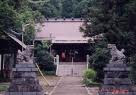
Shrine Sakaori no Miya 酒折宮 (さかおりのみや)
in Kofu 甲府市の東部
Yamato Takeru, the deity of linked verse (renga 連歌) is enshrined here.
He is said to have composed the first renku together with an old man, caretaker of the lights, of his army.
It is the famous kata-uta 片歌(かたうた)
This kind of linked verse has the form of
5 7 7
5 7 7
katauta (片歌, "poem fragment", "half song")

酒折宮連歌図
Yamato Takeru at Shrine Sakaori no Miya
『古事記』『日本書紀』等に伝えられる、ヤマトタケルノミコトの酒折宮伝承を図化したもの。
source : www.museum.pref.yamanashi.jp
quote
Yamato Takeru no Mikoto then came into Kai Province (Yamanashi Prefecture) and rested in Sakaori Palace. When dusk fell, he was served dinner. Seeng the lights that were being lit, he asked his servants in a song,
新墾(にひはり) 筑波を過ぎて 幾夜か寝つる
Since I passed Tsukuba
And Niibari,
How many nights have I slept ?
While no one was able to reply, the man in charge of the lights sang back,
計(かがな)べて 夜には九の夜 日には十日を
Counting the days -
Of nights there are nine nights,
Of days there are ten days.
Yamato Takeru no Mikoto praised this reply.
With Japanese and more text
source : (Hiraizumi Kiyoshi)

. Photo Album of Taro Kunugi, Facebook
Thank you, Taro san, for sharing your photos !

- Homepage of the Temple 酒折宮
- source : sakaorinomiya.jp
3 Chome-1-13 Sakaori, Kofu, Yamanashi
- reference : Sakaori-no-miya -
:::::::::::::::::::::::::::::::::::::::::::::::::::::::::::::::::::::::::::::::::::::::::::::::::::::
第十二回酒折連歌賞の公募は9月30日もちまして締め切りとなりました。
多数のご応募ありがとうございました。
結果発表は平成23年1月31日(月)事務局公表となっています。
http://www.sakaorirenga.gr.jp/
:::::::::::::::::::::::::::::::::::::::::::::::::::::::::::::::::::::::::::::::::::::::::::::::::::::
- - - - - More from my files :
足柄山 Ashigarayama and the Sakagami 坂神 "Deity of the Slope" -
At shrine Awa no miya 安房の浮宮
The Knife Ceremony and Fujiwara Yamakage 藤原山陰
Eating pickles at Kayatsu shrine 萱津神社
At shrine Kehi Jingu 気比神宮
Statue at shrine Mitsumine Jinja 三峰神社
At Mount Tsukuba 筑波山
At Usui Pass 碓氷峠, Usui-tōge
. At the slope Tsuetsukizaka 杖突坂 in Mie .
. Myoogi Jinja 妙義神社 Shrine Myogi Jinja . - Gunma
:::::::::::::::::::::::::::::::::::::::::::::::::::::::::::::::::::::::::::::::::::::::::::::::::::::
[ . BACK to WORLDKIGO TOP . ]
[ . BACK to DARUMA MUSEUM TOP . ]
- #yamatotakeru #OtotachibanaHime-
:::::::::::::::::::::::::::::::::::::::::::::::::::::::::::::::::::::::::::::::::::::::::::::::::::::


 Posts
Posts