4/23/2005

Nantenboo

[ . BACK to DARUMA MUSEUM TOP . ]
::::::::::::::::::::::::::::::::::::::::::::::::::::::::::::::::::::::::::::::::::::::::::::::::::::: 

Nantenboo 南天棒 "Nandina Stick"

Nakahara Nantenbo (1839-1925)
Nantenbō and Daruma

First a quote by Mark Stevens about Zenga

"THE GREATEST SKILL IS LIKE CLUMSINESS"
is a Taoist idea that became essential part of Buddhism. It delivers an important warning to slick artists who rely too much upon their fluency: Important art must be truthful, not just talented. And that means understanding the place of the knotty, awkward and simple.

Read his article here:
http://www.zenpaintings.com/review.htm


http://www.thegatesofparadise.com/nakahara_nantembo.htm


Tōjū Zenchū (Toojuu Zenchuu)
Article by MATTHEW WELCH

(I quote the parts related to our Daruma san.)

"IF I CANNOT BECOME A PRIEST of extraordinary accomplishment, I will not walk upon the earth," vowed eighteen-year-old Nantenbō (Tōjū Zenchū) to his Zen Master.' The impassioned spirit of this precocious young man was to burn brightly throughout his eighty-seven years. Not only did he rise through ecclesiastical ranks to an exalted position at one of the most prestigious Rinzai Zen monasteries in Japan, he was "a Zen priest of the people."'

In his determination to restore Zen to its former purity and brilliance, he emulated the severe methods of legendary Zen masters from the distant past. The thick staff of nandina (nanten) he used to "encourage" disciples and frighten "false priests" resulted in a great deal of notoriety, giving him the nickname Nantenbō (nandina staff).

He also published ten volumes of Zen commentaries, headed numerous Zen study groups and, by his own estimate, brushed over one hundred thousand calligraphies and paintings, which he freely gave away to anyone brave enough to ask. Certainly his efforts helped maintain Zen during Japan's tumultuous modernization. By wielding the brush with unmitigated vigor, he also may have unwittingly exerted tremendous influence on twentieth-century "action" artists and avant-garde calligraphers."

In 1857, Nantenbō penetrated Mu. Over the next eight years, he devoted himself to koan practice, doggedly seeking out noted Masters upon whom he tested his understanding.

It was during his travels in Kyushu in 1873 that Nantenbō discovered a large nandina bush growing beside a cow shed. From the owner, he learned that it was an ancient growth. While his companions waited by the roadside, Nantenbō pleaded with the farmer:

I have searched here and there, and this is a perfect dragon-quelling training stick. I f this tree goes on this way, how long will it live? Someday it will wither and die.... In my hands, however, it will become an instrument o f the dharma.
This nandina will resound for countless generations.
What do you say? Will you let me have it?


The farmer gave in to the earnest monk's request. Nantenbō cut a thick trunk, addressing the remaining stump: "I cannot live unless I make the most of your great death, you who have lived for two hundred years."

When Nantenbō finally joined his waiting companions with stick in hand, they chided the zealous priest, playfully dubbing him "Nantenbō" (nandina staff). The appellation stuck, and the priest henceforth was known by this sobriquet.

Inspired by his prized stick, Nantenbō embarked on a grand pilgrimage, visiting temples throughout Japan. According to Nantenbō's later accounts, he challenged resident priests to dharma battles, beating them with his stick and chasing them from their temples if they lacked true understanding.

Nantenbō's most prestigious appointment, in 1891 to the sprawling Zen complex of Zuigan-ji in Matsushima near Sendai, then he secluded himself in the nearby dilapidated temple of Daibai-ji. He wrote the following verse:

Great plum trees take twenty years to bear fruit.
In this place Nantenbō, too, ripens.


NANTENBŌ'S ART
Nantenbō first began to produce painting and calligraphy in his early fifties during his brief period at Zuigan-ji. This late date is not unusual, given the traditional Zen rejection of artistic cultivation among its clerics. In the past, harsh judgments were levied against monks who strayed from their prescribed routines.

Nevertheless, there is also a seemingly contradictory tradition in Japan of collecting and admiring the calligraphy of high-ranking Rinzai Zen priests. Termed bokuseki, or "traces of ink," such works were thought to resonate not only with the spirituality of the priest who wrote them, but with that of his teacher and his teacher's teacher, all the way back to Daruma himself.

Writing in one breath
The reason for not speaking while writing a large character is that the character will "die" unless it is written in one breath. One should magnify one's spirit and write without letting this magnified spirit escape. The character will die unless it is written using the hara [literally, gut, here suggesting the center of one's spirit].

Daruma
Imaginary portraits of the First Zen Patriarch, Bodhidharma, called Daruma in Japanese, are the most frequently encountered of all Zen-related subjects. All Zen Buddhists trace the existence of their doctrine to this Indian sage who, according to legend, left his homeland in the late fifth or early sixth century in order to propagate his brand of Buddhism in China. Daruma stressed meditation above all other methods of achieving enlightenment. In fact, it is said that he accomplished the astonishing feat of sitting in meditation ceaselessly for nine years while facing a wall at Shaolin temple on Mount Sung.

Nantenbō began to produce bust-portraits of Daruma in his early seventies. Many of these are boldly rendered, large-scale images. An unusual example, however, was painted in glaze when he was seventy-five on a small teabowl. Rendered in iron-oxide on cream-colored clay, the composition was completed in just a few strokes. The furrowed brow of the First Patriarch is suggested by two parallel lines. The eyebrows, beard, and hair are indicated by a series of rapidly applied dabs. The mouth is a single downward arch, and the eyes are nearly round circles with black dots for pupils. A single stroke indicates Daruma's robe as it falls from his left shoulder across his chest, covering his hands. The overall effect is charmingly simple and humorous.


One flower blooms into five leaves;
All things are accomplished naturally.


With an extreme economy of means and deliberate naivete, Nantenbō effectively conveyed the two characteristics most associated with the First Patriarch: his devotion to meditation, suggested by his wide-eyed stare, and his fierce determination, conveyed by his firmly set mouth. Daruma's portrait on a teabowl also recalls some of the more fantastic legends associated with the revered sage's life.


One-stroke Daruma (1961)

Unable to keep his eyes open during his protracted meditation at Shaolin temple, lie is said to have ripped off his eyelids in frustration; tea plants sprang spontaneously from the ground where the eyelids fell, thus beginning the custom in monasteries of drinking tea to prevent drowsiness. Such stories make Nantenbō's use of a teabowl for a portrait of Daruma altogether fitting.

Nantenbō inscribed the teabowl with a short, four-character quote attributed to Daruma himself. According to tradition, this was Daruma's pointed response when Emperor Wu (502-550) of the Liang dynasty asked him to recite the sacred truth's first principle:

Vast emptiness; nothing sacred

In addition to frontal portraits, Nantenbō also painted a number of images showing Daruma seated in meditation as seen from behind the sage. Long favored as a painting theme by Zen priests, these images are identified as "menpeki Daruma" or "wall-facing Daruma," referring to the ancient sage's nine years of meditation while facing a wall. As early as the fourteenth century in Japan, Zen artists playfully depicted the sage's silhouette by means of a single, meandering outline in a technique known as ippitsuga (one-stroke painting).


http://www.zenpaintings.com/collecting-new.htm

Nantenbō's conception of the menpeki theme is even more abbreviated than those of his predecessors. By eliminating the distinction between the head and shoulders, Nantenbō further distilled the silhouette of the First Patriarch. A simple, inverted U-shape is used to connote Daruma's body, and a horizontal ellipse is meant to imply his knees beneath monkish robes. Nantenbō's method of rendering these elements, however, is so geometric as to be unreadable as a cloaked figure.

In a final denial of pictorial volume, Nantenbō impressed his seals within the outline, thus assertively calling attention to the surface of the paper. The abstract nature of the figure, however, only accentuates the quality of the ink, applied in a single sweeping stroke of great energy.

Was Nantenbō simply inept at pictorial representation, or was he a visionary who pushed Zen painting further into a realm of dynamic epigraphs and emblems? The inscription on his menpeki painting offers a playful acknowledgment of the image's ambiguous nature:

The shape of Daruma facing the wall--
is it like a melon or an eggplant
from the fields of Hachiman in Yamashiro?

It is likely, in fact, that Nantenbō intentionally challenges people's rigid preconceptions about the nature of Daruma. In his autobiography he notes that while he receives many requests for paintings of Daruma, his images are often criticized for looking like owls or octopi. "Very interesting," the old priest observes. "People talk as if they have seen Daruma, but who has seen the original Daruma?"


Faith
If you have faith, then Nantenbō is also Buddha
Namu Nantenbō, namu Nantenbō, namu Nantenbō...

Read the full article here and look at the pictures.
http://kc-shotokan.com/Essays/nantenbo.htm

- Safekeep copy


Nanten, the Plant, with its red berries in winter


:::::::::::::::::::::::::::::::::::::::::::::::::::::::::::::::::::::::::::::::::::::::::


Since the above article covers all the aspects of Nantenbo, I will now show you some of his Daruma paintings.


Snowman Daruma - 1921


A Daruma made of piled-up snow.
As the days pass by,
Where has he gone? -
No traces of him remain.


source : www.bachmanneckenstein.com


:::::::::::::::::::::::::::::::::::::::::::::::::::::::::::::::::::::

Further LINKS to Nantenbo

Orientations September 2002Volume 33 Number 7
Meaning and Multiplicity: The Daruma Images of Nantenbo by Paul Berry
http://www.paragonbook.com/html/browsesubj/fullcitation.cfm?item=25398

enlightening strokes

Toju Zenchu (1839-1925),
known as Nantenbo, who painted an enso -- a Zen circle that symbolizes life in a perfected state. The haiku inscribed within the circle of this one reads,

"Born within the circle of life (enso)
the human heart must also become
round and complete (enso)."

Article about Zenga by Fred Stern at artnet
http://www.artnet.com/magazine_pre2000/features/stern/stern12-23-98.asp


Nantembo had tremendous energy and brushed Zen art daily as an integral part of his practice. He was strong and active to the day he died at age eighty-seven.


Look at many more pictures by Nantenbo.
http://www.zenpaintings.com/artist-nantembo.htm
http://www.zenpaintings.com/collecting-new.htm


Nakahara Nantembo at the Shambhala Gallery
Ever Onward Calligraphy
Distant Mountains
Sincerity
Daruma
http://zenart.shambhala.com/product-id/118

Sleeping Oxen, Painting
中原 南天棒(なかはら なんてんぼう)天保10年~大正14年(1839~1935)
肥前唐津(現佐賀県唐津市)生まれ。11才で平戸雄香寺に入ったのち、各地の高名な老師の元で修行。筑前久留米の梅林寺、羅山元磨に嗣法。混乱する瑞巌寺建て直しのため、本山妙心寺長老会議で特命派遣され、明治24年瑞巌寺124世となる。財政の立て直し、寺宝の整理・修理を押し進めるも、末寺の反発を招き、さらに伊達政宗木像破損事件のため、明治29年仙台大梅寺、白石傑山寺を経て兵庫県西宮海清寺に移る。諱は全忠、字は鄧州、室号は白崖窟であるが、自ら切り出した南天の棒を愛用したことから、南天棒の別号で知られ、乃木稀典、児玉源太郎らも参禅した。瑞巌寺に伝わる多くの書画を修理し今に残した。
http://hyousou.hp.infoseek.co.jp/seibido-2_011.htm


Enso and Ippitsu Daruma by Gabi Greve


Nanten, Nadina as a KIGO

::::::::::::::::::::::::::::::::::::::::::::::::::::::::::::::::::::::::::::::::::::::::::::::::::::: 

[ . BACK to DARUMA MUSEUM TOP . ]
[ . BACK to WORLDKIGO . TOP . ]

:::::::::::::::::::::::::::::::::::::::::::::::::::::::::::::::::::::::::::::::::::::::::::::::::::::

4/02/2005

Sumiyoshi Shrines

[ . BACK to WORLDKIGO  TOP . ]
. Osaka Sumiyoshi Shrine amulets and toys .
. Sumiyoshi Kaido 住吉街道 Sumiyoshi Kishu Highway .
::::::::::::::::::::::::::::::::::::::::::::::::::::::::::::::::::::::::::::::::::::::::::::::::::::: 

Sumiyoshi Jinja 住吉神社
Sumiyoshi Shrines in Japan


CLICK for more photos

There are many shrines with this name all over Japan.

quote
Sumiyoshi Grand Shrine
(住吉大社, Sumiyoshi-taisha)

is a Shinto shrine in Sumiyoshi ward in the city of Osaka, Japan.
It is the main shrine of all the Sumiyoshi shrines in Japan. However, the oldest shrine that enshrines the Sumiyoshi Sanjin, the three Sumiyoshi kami, is the Sumiyoshi shrine in Hakata.

It is called "Sumiyoshi-san" or "Sumiyossan" by the locals, and is famous for the large crowds that come to the shrine on New Year's Day for hatsumoode.

Sumiyoshi Taisha enshrines the Sumiyoshi Sanjin -- Sokotsutsu no Onomikoto, Nakatsutsu no Onomikoto, and Uwatsutsu no Onomikoto -- and Okinagatarashihime no Mikoto (Empress Jingū), and they are collectively known as the "Sumiyoshi Ōkami", the great gods of Sumiyoshi. Another term is "Sumiyoshi no Ōgami no Miya".

It gives its name to a style of shrine architecture known as sumiyoshi-zukuri.

The shrine became the object of Imperial patronage during the early Heian period. In 965, Emperor Murakami ordered that Imperial messengers were sent to report important events to the guardian kami of Japan. These heihaku were initially presented to 16 shrines including the Sumiyoshi Shrine.

Sumiyoshi Taisha is also regarded as the ancestor shrine of Hachiman shin 八幡神, the god of war, as the taisha enshrines Empress Jingū, who was the mother of Emperor Ōjin, who was deified as Hachiman.

Although Sumiyoshi Taisha is currently completely landlocked, until the Edo period, the shrine riding grounds (currently Sumiyoshi Park) faced the sea, and was considered the representative of the beautiful "hakushaseishou" (white sand and green pines) landscape. So much so that this type of scenery in designs and art is known as the Sumiyoshi design. In Murasaki Shikibu's The Tale of Genji, the shrine is used as an important stage in some chapters concerning the Akashi Lady.
© More in the WIKIPEDIA !


. Sumiyoshi Myojin 住吉明神  Great Deity of Sumiyoshi
and Matsuo Basho at Fukushima
. . . CLICK here for Photos !


. Jinguuji 住吉神宮寺 Sumiyoshi Jingu-Ji .


. Uwazutsunoo, Nakazutsunoo, Sokozutsunoo .

:::::::::::::::::::::::::::::::::::::::::::::::::::::::::::::::::::::::::::::::::::::::::::::::::::::


There are many rituals in the various shrines,
most of them are KIGO for haiku.

Let us look at some here.

kigo for the New Year

CLICK for original link and more ... blogari.zaq.ne.jp
Sumiyoshi tooka sechi-E
住吉踏歌節会 (すみよしとうかせちえ)
Dance and poetry banquet at Sumiyoshi Shrine

January 4 in Osaka
. . . CLICK here for Photos !
The dance is a tradition taken from China, where the dancers stamp their feet in rhythm.
Sumiyoshi tooka shinji 住吉踏歌神事(すみよしとうかしんじ)
fukumochi shinji 福餅神事(ふくのもちしんじ)
"ceremony of auspicious mochi rice cakes", Good Fortune Mochi Ritual

quote
In front of the kami, the fukuromochi yaku (bag holder), carrying a bag filled with small rice cakes (mochi), and the zubae yaku (plum branch holder), carrying a small plum branch, both repeat movements resembling bugaku dance.
During this time, the zubae yaku cries out, "Fukuromochi!" and the bag-holder replies, "Ō tomo yō!" After repeating this three times, the bag-holder counts the mochi inside the bag and intones "Manzairaku" three times. Finally, the distribution of the mochi to the onlookers takes place.
The fukuromochi ("mochi in the bag") seems to be associated with fukumochi ("good-luck mochi").

A ritual of the same name is held on January 11 at Atsuta Jingū in Atsuta Ward, Nagoya City, Aichi Prefecture. It is said to convey dance songs (tōka, tooka) that were popularly performed at the imperial palace during the Heian period.
A person playing the role of attendant (beijū) sings saibara songs, then dances solo with an uzue (magical staff) as a torimono (prop). Then the kōkoji (court dancers in tall white hats) hold their furizutsumi (rattle drums) high and shake them. Because of the sound made by these drums, this ritual is also commonly called the berobero ritual. This sound is said to foretell whether the year's harvest will be good or bad.
source : Mogi Sakae, Kokugakuin University, 2007

. Atsuta Shrine 熱田神宮 .

.................................................................................


Sumiyoshi no o-yumi 住吉の御弓 (すみよしのおゆみ)
Sumiyoshi o-yumi shinji 住吉御弓神事(すみよしおゆみしんじ)
Sumiyoshi mikechi shinji 住吉御結鎮神事(すみよしみけちしんじ)
Sumiyoshi ontarashi 住吉御弓(すみよしおんたらし)
On January 13.
First ritual shooting with a bow.
First the head priest shoots an arrow, then members of the Ogasawara style 小笠原流 of kyudo (kyuudoo 弓道) archery have a go.
After that, members of the Osaka Kyudo Group have a big competition.

SAIJIKI – THE NEW YEAR

:::::::::::::::::::::::::::::::::::::::::::::::::::::::::::::::::::::::::::::::::::::::::::::::::::::

kigo for early spring

ichiya kanjoo 一夜官女 (いちやかんじょ)
court lady for one night

. . . . . ichiji jooroo 一時上臈(いちじじょうろう)

February 20 (Sometimes January 20)
at Nozato Sumiyoshi Shrine 野里住吉神社


CLICK HERE for more photos:
source : www.jinjacho-osaka.net

Seven girls from the parishioners are choosen to perform the duties of a shrine maiden (miko). They had to serve special mochi ricecakes and food to the deities in seven special barrels.
They had to pretend this was a human sacrifice, singing "hihi" to the deities.
The food was
白蒸し・鏡餅・小餅・串柿・大根煮・白菜煮・小豆煮・豆腐白味噌煮の他、
鯉(二枚おろし)・鮒(生のまま)・鯰(白味噌煮)の川魚

quote
Once upon a time
a very poor village lay beside the river Yodo. Because the river often flooded causing damage to the village, the villagers tried to appease the God by sacrificing a young girl every year. In the seventh year of this practice, a brave samurai heard about the tragic story and offered himself to be sacrificed instead of the girl for the seventh year. He was placed into a coffin and left at the shrine.
The next day, a body of large baboon lay on the precinct covered with blood. But the samurai had disappeared.
At this Shinto shrine, this legend has been passed down as a festival in which seven girls are blessed with good fortune and health. There will be a procession of the girls and their families followed by a festive ceremony and a dance by shrine maidens on this day.
source : /archives.kansaiscene.com

. OBSERVANCES – SPRING SAIJIKI .

:::::::::::::::::::::::::::::::::::::::::::::::::::::::::::::::::::::::::::::::::::::::::::::::::::::

kigo for mid-summer

Sumiyoshi no o-taue 住吉の御田植 (すみよしのおたうえ)
rice platning at Sumiyoshi

..... onda 御田(おんだ)"fields of the Gods"
..... o-taue, otaue 御田植(おたうえ)
Sumiyoshi odori 住吉踊(すみよしおどり)Sumiyoshi dance
yaotome no ta mai 八乙女の田舞(やおとめのたまい)
young women dancing and planting rice on the sacred rice paddies of the shrine (onda).
July 6.
This goes back to a legend of the Gods having fields planted in this area. In former times, the courtisans of the pleasure quarters of Osaka would come and walk around the sacred field in a splendid and colorful parade. Then 24 girls would plant the rice.
. . . CLICK here for Photos !


. gannin boozu 願人坊主 mendicant monks .
and the Sumiyoshi Dance

.................................................................................

kigo for late summer

Sumiyoshi no o-harai 住吉の御祓 (すみよしのおはらい)
purification ritual at Sumiyoshi

Sumiyoshi matsuri 住吉祭(すみよしまつり)Sumiyoshi festival
Sumiyoshi nansai 住吉南祭(すみよしなんさい)
Sumiyoshi summer festival
. . . CLICK here for Photos !

Sumiyoshi nagoshi no o-oharai
住吉夏越の大祓(すみよしなごしのおおはらい)
great summer purification ritual at Sumiyoshi
Sumiyoshi no higawari 住吉の火替(すみよしのひがわり)

. . . CLICK here for festival Photos 住吉祭り !

Summer Purification Ceremony (nagoshi) KIGO

Tsukudajima Sumiyoshi matsuri
佃島住吉祭(つくだじますみよしまつり)
Sumiyoshi festival at Tsukudajima, Tokyo

Tsukuda matsuri 佃祭 (つくだまつり)

:::::::::::::::::::::::::::::::::::::::::::::::::::::::::::::::::::::::::::::::::::::::::::::::::::::

kigo for late autumn

Sumiyoshi no ichi 住吉の市(すみよしのいち)
market at Sumiyoshi

Sumiyoshi sumoo e 住吉相撲会(すみよしすもうえ)
sumo wrestling at Sumiyoshi

At Hakata, Fukuoka, prayers for a good harvested are offered.
Young children in traditional robes parade in the city, the next day horse riding and shooting (yabusame) and wrestling (sumoo) is offered.
相撲会祭(すもうえさい) 福岡市博多

takara no ichi 宝の市 (たからのいち)
"treasure market"
masu ichi 枡市(ますいち)masu measure cups market

. Masumasu Daruma 升々だるま measuring cups .


:::::::::::::::::::::::::::::::::::::::::::::::::::::::::::::::::::::::::::::::::::::::::::::::::::::

Rituals at Sumiyoshi shrines

. WASHOKU
Water for Purification
 
"Sumiyoshi-no-o-yu" (Sumiyoshi Bath)


. WASHOKU
iwashi no atama yaki イワシの頭焼き grilling 1000 sardine heads
 
Sumiyoshi Shrine in Hiroshima

. Dai Dai kagura, Matsumae Kagura 松前神楽  
Sumiyoshi Shrine in Otaru, Hokkaido


:::::::::::::::::::::::::::::::::::::::::::::::::::::::::::::::::::::::::::::::::::::::::::::::::::::

Shintō yūrai no koto

. . . it is said that Izanagi and Izanami have three male children (the Sun god, Amaterasu, the moon god, and Susanoo) and one female child (Hiruko). Hiruko arrives in her boat at the palace of the Dragon king, who raises the child for some years and then sends it back; but because the Dragon king has no domain on land, he assigns the high waters of Sumiyoshi as the domain of Hiruko.
The Shintōshū concludes the passage with a note that this is the deity venerated in Nishinomiya, and celebrated in an autumn festival of fishermen under the name of Ebisu.

Sakamoto Tarō. Shintōshū. Vol. 1. Shintō taikei. Bungakuhen. Tōkyō: Shintō taikei hensankai, 1988, pp. 2-3.
- source : Prof. Dr. Raji C. Steineck -

Izanagi and Izanami
The two decided that they wished to unite—often interpreted as marriage—but their first attempt at sexual union resulted in a deformed child, Hiruko (“Leech Child,” known in later Shintō mythology as the god Ebisu),
- source : global.britannica.com -


Izanami and Izanagi
However, during this sacred marriage ritual Izanami wrongly spoke first when they passed each other and as a consequence of this impiety their first child was a miscarriage and born an ugly weakling without bones. This was the god Hiruko (later Ebisu) who would become the patron of fishermen and one of the seven gods of good luck. Hiruko was abandoned by his parents and set in a basket for the sea to take it where it would. The second child was the island of Awa . . .
- source : Mark Cartwright -

:::::::::::::::::::::::::::::::::::::::::::::::::::::::::::::::::::::::::::::::::::::::::::::::::::::

quote
Sumiyoshi Shinko ... Sumiyoshi Faith

The faith related to the shrine Sumiyoshi Jinja, which includes guardianship over safe sea travel, waka poetry, agriculture, and fishing.
The Nihonshoki records that "Sokodsutsunoo no mikoto, Nakadsutsunoo no mikoto, and Uwadsutsunoo no mikoto are Sumiyoshi no ōkami". Most of the Sumiyoshi shrines in Japan worship these three kami along with the Empress Jingū who received instruction from the three kami regarding her military expedition to the Kingdom of Silla on the Korean peninsula.

Envoys to China (kentōshi) made pilgrimages to Sumiyoshi Taisha in Settsu (Sumiyoshi-ku, Osaka City) before boarding their boats, the government made offerings to the shrine, and the bows of envoy ships were furnished with places to worship Sumiyoshi (Manyōshū, Nittō guhō junrei kōki).
The Jinmyōchō section of the Engishiki records seven Sumiyoshi shrines. Apart from the shrine at Harima (Kamo-gun, Hyōgo Prefecture), all of the shrines west of Settsu are listed as "famous shrines" (myōjin, myoojin, myojin – written either as 名神 or 明神). Often non-Sumiyoshi shrines paint Sumiyoshi Taisha on boat ema (funaema) they receive as offerings. From this we know that there was fervent Sumiyoshi faith related to sea travel among all classes, from aristocrats to commoners. Munakata Taisha (in Munakata-gun, Fukuoka Prefecture) also has a faith related to the safe sea travel of envoys to China (kentōshi).

Sumiyoshi Taisha in Sumiyoshi-ku, Osaka City, famous for its worship of the three kami of Sumiyoshi, has appeared in works of literature.
Sumiyoshi is also famous as a kami of waka poetry. Renga and haiku poets were devotees, and poetry contests (uta awase) were held at the shrine.
There is a story in Ise Monogatari where the kami appears and recites a waka poem. The Hachiman engi, which tells of the Empress Jingū's Silla expedition, was made into a hanging painting which was used for "illustrated storytelling" (etoki), and the story later became an otogi-zōshi (fairy-tale). The protagonist of the otogi-zōshi Issun bōshi was a "child born as the result of prayers" (mōshigo) to the kami Sumiyoshi Myōjin, and this story suggests the development of a new faith.

In the same way, the otogi-zōshi "Sumiyoshi engi" elaborates on the spiritual "efficacy" (reigen) of Sumiyoshi Myōjin, and the belief spread widely that the "original deity" (honji) of Sumiyoshi Myōjin was Ugayafukiaezu no mikoto. In literature relating to the Sumiyoshi Myōjin faith, the kami is depicted as an old man or as a young child wearing red clothing. Sumiyoshi appears in the form of an old man in the famous yōkyoku (Noh script) Takasago about the spirits of two pine trees (Sumiyoshi and Takasago) that stem from the same root.

From the Edo Period till the current day, this story is told at weddings to celebrate the newlywed's long life together. Sumiyoshi Taisha has a festival called the Otaue Matsuri (O-taue matsuri .. the "rice planting festival") from which we know that the faith also had an agricultural element.
source : Nogami Takahiro . Kokugakuin University. 2007

:::::::::::::::::::::::::::::::::::::::::::::::::::::::::::::::::::::::::::::::::::::::::::::::::::::

CLICK for more photos

唐人も見よや田植の笛太鼓
toojin / karabito mo miyo ya taue no fue daikoo

a foreigner watches
the rice planting too ...
flutes and drums


Kobayashi Issa at Sumiyoshi Shrine

Because it alludes to a "foreigner" (or "foreigners"), this haiku is reminiscent of one written in 1793, when Issa was visiting Nagasaki:

kimi ga yo ya karabito mo kite toshi-gomori

Great Japan--
a foreigner also attends
the year's end service!

In this earlier haiku, the foreigner was most likely a Dutchman.
The present one, written in Issa's home province, has the prescript, "Sumiyoshi": a Shinto shrine in Osaka. Is he remembering another brush with the foreign that he had in Sumiyoshi?

R. H. Blyth thinks that karabito in this haiku of 1819 refers to the Chinese ("Men of Cathay"); A History of Haiku (Tokyo: Hokuseido, 1964) 1.350, overleaf.
Tr. and Comment - David Lanoue

:::::::::::::::::::::::::::::::::::::::::::::::::::::::::::::::::::::::::::::::::::::::::::::::::::::
:::::::::::::::::::::::::::::::::::::::::::::::::::::::::::::::::::::::::::::::::::::::::::::::::::::


(Oume)
Aome Daruma Market, Sumiyoshi Jinja

青梅だるま市 住吉神社

every year on the May 2 and 3, this market takes place.


Here is a wonderful link of Wada san with music and great pictures.
http://wadaphoto.jp/japan/oume.htm


.................................................................................

Burning old Daruma Dolls on New Year
お焚上所


Look again at this great page of Wada san for more smoke and flames.
Thank you, Wada san.
http://wadaphoto.jp/japan/oume.htm


:::::::::::::::::::::::::::::::::::::::::::

. Oome 青梅 / おうめ Ome village Tokyo .

In Aome (Aoume, Oume, Ome), another speciality is a
Oume Princess Daruma.
Hime Daruma made in the Kanto area are rather special.


青梅姫だるま(東京)
多摩地方で作られるもの関東では珍らしい姫だるまである。
http://www.darumanetjapan.com/da_text/datext.html

::::::::::::::::::::::::::::::::::::::::::::::::::::::::::::::::::::::::::::::::::::::::::::::::::::: 

. Sannoo matsuri 山王祭 (さんのうまつり) Sanno Festival .
Hiyoshi matsuri 日吉祭(ひよしまつり) Hiyoshi shrine festival
sarumatsuri 申祭(さるまつり)monkey festival

::::::::::::::::::::::::::::::::::::::::::::::::::::::::::::::::::::::::::::::::::::::::::::::::::::: 

There is a memorial stone of a haiku by Matsuo Basho at the entrance of the Sumiyoshi shrine in Osaka.


升買て分別かはる月見かな
masu katte funbetsu kawaru tsukimi kana

I bought a measuring box
which made me change my mind
about moon viewing . . .


Basho spent the evening of the "later moon viewing" at the estate of Hasegawa Keishi 長谷川畦止亭.
The year is Genroku 7, 9th lunar month, 13th day.
There was a special market for masu at the shrine and Basho bought one.
He fell ill soon after visiting the market,and could not enjoy a haiku meeting for the full moon night.
This was his "greeting haiku" for the meeting.

This hokku has the cut marker KANA at the end of line 3.


The Sumiyoshi Market sells a lot of household utensils to our day and was already famous in the times of Basho.
Masu come in various sizes, and are used to measure rice grains, beans and other dry goods. Smaller ones are also used to have a drink of sake.

. Masu 升 measuring cup .

Matsuo Basho
. Komojishi shuu 薦獅子集 Komojishi Shu Collection .
A collection offered to Sumiyoshi Shrine 住吉神社 in 1693.
Compiled by his disciple Hasui from Kanazawa 巴水.
There is also a Yasue Sumiyoshi Jinja 安江住吉神社 in Kanazawa.

::::::::::::::::::::::::::::::::::::::::::::::::::::::::::::::::::::::::::::::::::::::::::::::::::::: 

. Japanese Legends - 伝説 民話 昔話 – ABC-List .

.....................................................................................................
Fukuoka 福岡県 博多区 Hakata ward

筑前住吉神社一夜の松 the pine tree growing over night at the Sumiyoshi Shrine in Chikuzen
In the year 1439, branches of matsu 松 a pine tree hit the face of the Lord during the construction of a new Shrine and the tree was cut down. But Oh wonder, it grew back to its former size over night.


.....................................................................................................
Fukushima 福島県 いわき市 Iwaki city

Fukushima, Iwaki, Onahamasumiyoshi, Sumiyoshi−1
. Oni playing kubihiki 首引き "neck pulling" .


.....................................................................................................
Ibaraki 茨城県 鹿島市 Kashima city

daija 大蛇 a huge serpent
A huge serpent came to live at 住吉神社 Sumiyoshi Shrine.
The animal soon moved to the pond in the compound, but the pond dried out soon.


.....................................................................................................
Mie 三重県

. 猪田村住吉神社 Inodamura Sumiyoshi Jinja 猪田村営 Inodamura no Miya / 猪田神社 Inoda Jinja .


.....................................................................................................
Osaka 大阪府 住吉区 Sumiyoshi ward

sazare-ishi, sazare ishi さざれ石
boulder grown from pebbles

. Sumiyoshi Kaido 住吉街道 Sumiyoshi Kishu Highway .


.....................................................................................................
Yamaguchi 山口県 小野田市 Onoda city

inugami イヌガミ Wolf Deity
. Sumiyoshi Kaido 住吉街道 Sumiyoshi Kishu Highway .

.....................................................................................................

- reference : Nichibun Yokai Database -

::::::::::::::::::::::::::::::::::::::::::::::::::::::::::::::::::::::::::::::::::::::::::::::::::::: 


[ . BACK to WORLDKIGO  TOP . ]
[ . BACK to DARUMA MUSEUM TOP . ]
- #sumiyoshi #sumiyoshijinja -
:::::::::::::::::::::::::::::::::::::::::::::::::::::::::::::::::::::::::::::::::::::::::::::::::::::

3/08/2005

Enku Master Carver

[ . BACK to DARUMA MUSEUM TOP . ]

. Welcome to Master Carver Enku 円空 ! .

:::::::::::::::::::::::::::::::::::::::::::::::::::::::::::::::::::::::::::::::::::::::::::::::::::::

Buddhist Sculptors Gallery

:::::::::::::::::::::::::::::::::::::::::::::::::::::::::::::::::::::::::::::::::::::::::::::::::::::


Enku, the Master Carver 円空 (Enkuu)
[1632?~1695]


This book by my friend and fellow kyudo archer Dotzenko covers all the aspects of Enku's art. Grisha lived in Kamakura while we were there too, introducing me to Enku, Mokujiki and a lot more of Buddhist Art. I owe a lot to this wonderful person.

"ENKU, MASTER CARVER",
by Dotzenko. Grisha, F.,

Kodansha International Ltd. Toyko, 1976. Fine, Fine. First Edition as stated. Incl. Forward by Tsuneyoshi Tsuchiya. Monograph of the itinerant Buddhist priest who roamed remote villages in Japan leaving thousands of his inimitable "hatchet-carved" statues.
11 9 plates. 156 pages.

:::::::::::::::::::::::::::::::::::::::::::::::::::::::::::::::::::::::::::::::::::::::::::::::::::::::::::::::::::::::::::::::::


Enku has now its own BLOG - January 2013 :

. Welcome to Master Carver Enku 円空 ! .


:::::::::::::::::::::::::::::::::::::::::::::::::::::::::::::::::::::::::::::::::::::::::::::::::::::::::::::::::::::::::::::::::


Look at more Fudo Myo-O by Enku
. Enku and his Fudo Statues 円空仏


:::::::::::::::::::::::::::::::::::::::::::::::::::::::::::::::::::::::::::::::::::::::::::::::::::::


How a piece of wood becomes a Buddha Statue
in the hands of Enku


In the forest


a vision


taking shape


from Honda, infoseek


.............................................................................


Enku walked all along Japan and attended mostly to the poor people. If he could not help the dying in a village any more, he would take a piece of firewood from a man's hut, cut a rough figure of Kannon Bosatsu and give it to the poor, telling him or her to use it as a guide on the trip to the nether world.

He also cut rough koppa butsu 木っ端仏, statues from scrap, to console poor mothers who had lost their babies, either through accidents or on purpose, since they could not feed and raise female babies in many regions of Northern Japan. (By the way, many Kokeshi (1) こけし were carved for that purpose too.)

.. .. .. .. .. Koppa-Butsu Statues こっぱぶつ
CLICK for more photos

On the Tsugaru penninsula, there are many temples who still house one or two Enku Statues. In one temple I visited, we could not see it, because, as the priest told me, the statue was all eaten by mice. Well, how come the mice eat wood? I asked him. Poor people throw a handful of rice over the statues after the harvest as an offering and thank , and the Enku statues have many nooks where the rice is left. In winter, the mice come feeding on these offerings, picking bit by bit off the wood too.


In Memory of his death 130 years ago, now in 2005 there is a special
Enku Exhibition in Kobe at the Daimaru Department store.
March 9 to 21.
円空展 大丸ミュージアムKOBE


http://www.fururu.net/category/monthly/1106140859


.................................................................................


Self-Portrait of Enku in Seki, Gifu 自刻像
善財童子 (通称 自刻像)神明神社 所蔵
http://www.city.seki.gifu.jp/kankou/seki/enku.html

:::::::::::::::::::::::::::::::::::::::::::::::::::::::::::::::::::::::::::::::::::::::::::

うぐひすに耳欹てん円空仏
uguisu ni mimi sobadaten Enkuu butsu

he pricks his ear
to listen to the uguisu -
this Enku statue


Shintani Hiroshi 新谷ひろし

. Amulets for Ear Diseases .


Born in Gifu Prefecture, Enku the Priest traveled on foot throughout Japan and carved approximately 120,000 wooden images of Buddha during his lifetime. He is said to have had no permanent home, however, during his latter years, he rooted himself deeply into the town of Seki. After the restoration of the Mirokuji Temple, he entered a stationary life to attain Buddhahood during his lifetime on the banks of the Sagami River in Seki.


Today, there remain over 150 images of "Enku Buddha"  円空仏 carved by Enku the Priest. "Enku Buddha", a simple wooden statue dynamically carved with a single hatchet, may appear unrefined, however, the faces of Buddha express affluent emotions. His unique style has also attracted fans from overseas, enjoying high appraisal.

Enku went on a pilgrimage all over Japan, and carved Buddhist statues one after another. More than 150 statues by Enku have been identified and authenticated in Seki City, and it has been said that he entered nirvana in this area. A memorial stela for his entrance to nirvana now stands there, silently looking at the Nagara River.

The Enku House
The Enku House is a resource center featuring Enku the Priest who is strongly associated with Seki City. Built to be the main attraction for the historical park plan, here you will find displays of his carved Buddha images and an introduction of his entering into the life of Buddhahood.It is the core facility for the Field Museum, interlocking the Mirokuji Temple, where Enku spent his latter years, and the Sagara River, where he attained Buddhahood. Many of the images of Buddha carved by Enku, which are found within the city, are displayed here.
http://www.sekikanko.jp/e/guide/enku.html


Enku's Grave ath the temple Miroku Ji 弥勒寺
http://www.nihonkoenmura.jp/theme3/enku04.htm

Enku made 120,000 wooden images of Buddha during his life-long pilgrimage on which he visited many parts of Japan, including Hokkaido. It is said that he reached Seki and died here. Though he led his life as a poor pilgrim and traveling artist, he is said to have been an almsgiver all his life. When we look at his wooden statue of himself, we can feel his warm personality. 入定塚 Nyujo-tsuka is Enku's grave. It is said that in 1688 he was buried here.

Buddhist prayers were the passion that drove him to a lifelong commitment to art and recited many while many villagers watched in sorrow. Mirokuji Temple Ruin is the remains of a temple reconstructed by Enku in his later years. We can still see the remains of a tower built in the Hakuho period.
http://www.nhk-chubu-brains.co.jp/DDT-E/gifu/seki/enku.html

:::::::::::::::::::::::::::::::::::::::::::::::::::::::::::::::::::::::::::::::::::::::::::


ENKU: YAKUSHI SANZON 薬師三尊
(Triad Image of Yakushi Buddha by Enku)


http://www.forest.minokamo.gifu.jp/ART/bunkazai/b3.html

These images were created by Reverend Enku when he visited the Shima region in 1674.Two Bodhisattva figures (Nikko and Gakko) are placed on both sides of the Yakushi Buddha, representing the center of bliss. They all look as though they are watching the present world clad with garments woven from the passage of time.
http://www.town.isobe.mie.jp/cont_en/history/5/indexc.html

:::::::::::::::::::::::::::::::::::::::::::::::::::::::::::::::::::::::::::::::::::::::::::

Enku, unlike traditional sculptors, sculptured freely, roughly, and unexpectedly by using one piece of scrap wood and timber sent afloat down a river. Koppabutsu 木っ端仏 are made from scrap pieces of wood.
He was an extraordinary novelist in the early Edo era who expressed his strong religious believe in carving.

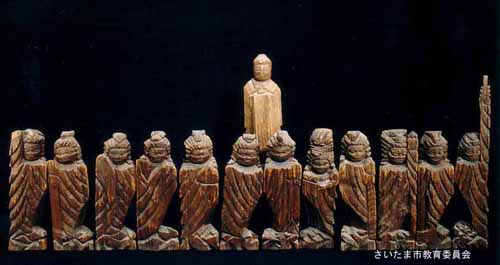
Images of 12 Heavenly Generals 十二神将


Saitama Prefecture


Another link with Enku Material, in Japanese.

Small Kannon Statues 観音群像
. . . CLICK here for Photos !

Yakushi Nyorai 薬師如来
. . . CLICK here for Photos !


Owarino Enku Butsu 尾張野の円空仏
. . . CLICK here for Photos !


Enku Statues of Hokkaido 北海道の円空仏
http://www.hiyama.or.jp/enku/
.. .. .. .. .. .. .. .. .. .. .. .. .. .. Click on the map
http://www.hiyama.or.jp/enku/butuzo/default.htm
http://www.hiyama.or.jp/enku/butuzo/20.htm
http://www.hiyama.or.jp/enku/butuzo/03.htm


:::::::::::::::::::::::::::::::::::::::::::::::::::::::::::::::::::::::::::::::::::::::::::
Enku was born in Hashima, Gifu Prefecture.
There is now a small Museum with 17 statues in his honour.

There is also a Kannon Statue in memorial of his mother, who drowned in a flood in 1638.

円空上人生誕の地「はしま」で最も多くの円空仏が安置されている中観音堂・羽島円空資料館では、本尊の十一面観音像をはじめ17体の円空仏(県重要文化財)を間近に見ることができます。
. . . CLICK here for Photos !


:::::::::::::::::::::::::::::::::::::::::::::::::::::::::::::::::::::::::::::::::::::::::::

Enku Museum at Senkoo-Ji Temple 円空仏寺宝館


The above picture shows Ryoomen Sukuna, a famous deity with two faces. Usually this deity holds bow and arrow, but thinking of the woodworking people of Hida, Enku depicted him with an ax instead.

千光寺を開山したともいわれる両面宿儺は、日本書紀によると、「体は一つであるが、顔が前後にあり手足が4本ずつある力持ちであった。4本の手で弓矢や剣を同時に用いて、皇命に隨わなかったため征伐された」という意味のことが記されているようである。しかし飛騨人にとっては飛騨の国を統治していた豪族であったとして、なじみ深い存在となっている。円空は、これの造型化に当たり独特の感覚と創造性をもって、後ろにあったという顔や手を前に並べ、持っている弓矢を斧にかえた。顔の表情も善悪両面を表している。善を中心にしているところから、飛騨人の立場になって造ったのではないかと想像される。円空の晩年作で屈指の傑作とされている。
http://www6.plala.or.jp/ebisunosato/enku.htm

. Ryoomen Sukuna 両面宿儺 Sukuna with two faces .

:::::::::::::::::::::::::::::::::::::::::::::::::::::::::::::::::::::::::::::::::::::::::::

Enku Museum in Minami Town, Gifu Pref.
About 90 Statues of Enku.
円空のふるさとと言われる美並町に最もふさわしいのが、この美並ふるさと館でしょう。円空ふるさと館と生活資料館に分かれ、円空ふるさと館には初期から晩年期にかけて彫られた円空仏約90体を展示しているほか、円空上人の生涯を写真やパネルでたどれるようになっています。
http://minami-kanko.appa-net.com/minami06_3.html


More Links with Enku Statues

Arako Kannon 荒子観音寺の円空仏

. 荒子観音 Arako Kannon - Nagoya .


. . . CLICK here for Photos : Arako Kannon!


Yakushi Temple in Nagoya 鉈薬師の円空仏

http://www.a-namo.com/ku_info/chikisaku/pages_n/enku_butsu.htm


Miroku Temple and Enku Buddhas
美濃・関・弥勒寺


:::::::::::::::::::::::::::::::::::::::::::::::::::::::::::::::::::::::::::::::::::::::::::


円空は、江戸時代前期に北海道から近畿に至る各地を旅したお坊さんです。各地に多数の「円空仏」と呼ばれる粗削りの木彫仏像を刻み、残していきました。飛騨地方でも各地の寺社や旧家に多くの円空仏が見られます。

「ナタバツリ」と呼ばれる鉈で粗く削った独特の製作スタイルや、粗削りながらもどことなく柔和で温かみがある表情は多くの人を魅了しつづけています。飛騨の里にあるものは、円空の作風に魅せられた近年の職人たちによる作品です。
http://www.hidanosato.org/shinko/rbsb_main.html

:::::::::::::::::::::::::::::::::::::::::::::::::::::::::::::::::::::::::::::::::::::::::::::::::::::
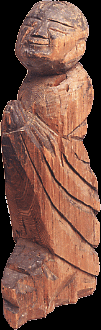

Some safekeep copys of the Fudo Pictures are here, starting from #49.

My Photo Album : Fudo Myo-O


:::::::::::::::::::::::::::::::::::::::::::::::::::::::::::::::::::::::::::::::::::::::::::::::::::::
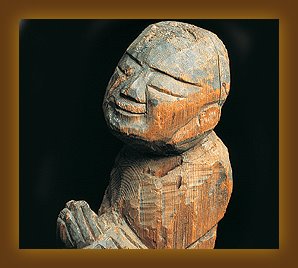

Contribution from a friend, July 2006

Enku: Sculptor of a Hundred Thousand Buddhas,
by Kazuaki Tanahashi, Shambhala, Boulder, CO, USA, 1982 (122 pages).

At the time the book was published, he taught various subjects at the Zen Center in San Francisco. It has 87 black and white plates of Enku's work, plus a number of comparative line drawings of various subjects, illustrating how Enku's style evolved from his early period to his late period. There are also a number of Enku's poems (English only).

What I first liked about Enku, when I came across Dotzenko's book, were the woodchip Buddhas (koppa 木っ端). He put me in mind of Alberto Giacometti, who sculpted elongated, attenuated human figures. From Wikipedia, about Giacometti:

"Obsessed with creating his sculptures exactly as he envisioned through his unique view of reality, he often carved until they were as thin as nails and reduced to the size of a pack of cigarettes, much to his consternation."

As Kazuaki Tanahashi traveled around Japan with the photographer Tetsuo Kuribara, he collected folklore about Enku and his work. My favorite, from 'a man in Hida':

When I was a child, there were a lot of Enku's Buddhas in my village temple. They kept them standing in rows on the altar in a small prayer-house there. The old caretaker once said to me, 'You know those Buddhas Enku carved? They certainly are whimsical . . . whenever you count them, you get a different number.'

' Why, what do you mean?' I asked.

' Well, it's because they're always going out to play.'


Footnote to this by Gabi Greve:

Children used the statues of Enku and Mokujiki to play with. For example, one statue was frequently thrown in the shallow river of the village in summer, and the children could swim for it to get it back.

Statues of Mokujiki where carved hollow in the backside, so the kids could use it as a sledge in wintertime. The faces of these statues are completely worn out.


Read more about
......... Mokujiki 木喰の不動さま


:::::::::::::::::::::::::::::::::::::::::::::::::::::::::::::::::::::::::::::::::::::::::::::::::::


しぐるるや円空仏の鉈あとに 
shigururu ya Enkuubutsu no nata ato ni

this winter drizzle -
the remains of the hatchet
of Enku's Buddha statues 


source : Wada san, NHK haiku  和田孝さん   
November 2012


:::::::::::::::::::::::::::::::::::::::::::::::::::::::::::::::::::::::::::::::::::::::::::::::::::
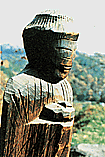

. Gifu Hashima Station
Statue by Enku and Haiku


BACK TO

Who made Buddha Statues ?
Mark Schumacher


Buddhist Sculptors Gallery


Daruma Pilgrims in Japan

. Welcome to Master Carver Enku 円空 ! .
:::::::::::::::::::::::::::::::::::::::::::::::::::::::::::::::::::::::::::::::::::::::::::::::::::::
2/25/2005

Toshogu Memorial Shrines

[ . BACK to WORLDKIGO  TOP . ]
. Tokugawa Ieyasu 徳川家康 . (1543 - 1616) .
:::::::::::::::::::::::::::::::::::::::::::::::::::::::::::::::::::::::::::::::::::::::::::::::::::::::

Toshogu Shrines,
Memorial Monuments for Tokugawa Ieyasu
東照宮 徳川家康


.......................... 1543 - 1616
http://www.samurai-archives.com/ieyasu.html

. Tokugawa Ieyasu 徳川家康 . (1543 - 1616) .
- Introduction -

Tokugawa Ieyasu is the founder of the Edo Shogunate, he was the first shogun and osthumously became some kind of protecting deity with his own shrine in the Nikko Mountains, north of Tokyo (an auspicious place to protect his city according to Chinese Feng-Shui Geomantic lore).
The correct spelling of the name should be Tooshoo-Guu in Nikkoo.
日光の東照宮

You can read more about the heroes who were active around 1600 to unite the many fiefdoms of Japan, the three most famous of them are Nobunaga, Hideyoshi and our Ieyasu.
http://www2.kanawa.com/japan/figure7.html


For our Haiku friends, here is the famous story to shed light on the temperament of these three:
When confronted with a nightingale in a cage, which would not sing, each had his own approach to this situation.

Nobunaga<>
If the bird does not sing, kill it!

Hideyoshi<>
If the bird does not sing, I will make it sing!

Ieyasu<>
If the bird does not sing, I will wait until it sings!


As you might imagine from the above episode, Ieyasu outlived and out-waited his opponents and then took over power, like a ripe apple falling into his hands.

Anyway, Ieyasu was an impressive figure and I will talk about him in another story, but here we are concerned with him after his death. His heirs and the nation needed a hero to unite for the future, so memorial shrines (Toshogu) were build, first in Kunoo-San. Another reason for building these luxurious shirnes, some critics say, was to make the local daimyoo, who were ordered with the buildings, spend so much money, they would not have a penny left to plot further fighting.

Tokugawa Ieyasu was obsessed with food and medicine to prolong his life. But he also liked to try new things, like the "tempora", tempura introduced by the Portugese missionaries.
The name refers to the time when the Catholics were not allowed to eat meat, quattuor tempora.
Ieyasu ate too much of it one day, became sick and died shortly after !

More details about his life:
http://www.samurai-archives.com/ieyasu.html

Latest research found that Ieyasu did not die of food poisoning or stomach cancer, but of a cancer of the pancreas.

:::::::::::::::::::::::::::::::::::::::::::::::::::::::::::::::::::::::::::::::::::::::::::::::::::::

Kunoo-San Toshogu 久能山の東照宮 Kuno San, Mount Kunô


Ieyasu died in 1616, and was buried at Mount Kuno-San in Shizuoka Prefecture according to his will. The shrine is situated on a steep hill overlooking the beach, but you can easily reach it nowadays via a ropeway from the other side, driving over some spectacular rock formations, called the “Rocks like folding screens” (byoobu-yama).

Anyway the detailed story of Kunoo-San (various spellings) is here:
https://www.toshogu.or.jp/

Mount Kunô (Kunôsan)
Utagawa Kuniteru II (Kunitsuna II; here signed as Kunitsuna)

:::::::::::::::::::::::::::::::::::::::::::::::::::::::::::::::::::::::::::::::::::::::::::::::::::::

Ueno Toshogu 上野の東照宮
CLICK for more photos

There is another famous Toshogu Shrine at Ueno, in the heart of Tokyo, built in 1650. This is the most convenient of the Toshogu Shrines to visit on a short Japan trip, and it gives you a vivid impression of this particular style of architecture, which I would like to call “Chinese Baroque”, overloaded with decorations, a symphony in colours and shapes, just overwhelming in all the details.
Look at it here:
http://www.edo-ya.com/guide/spots/toshogu.htm

徳川家康は元和2年(1616)4月17日駿府(静岡市)で死去し,死後日光東照宮に葬られた。その威光を末永く示すため,各所に家康を祀る東照宮が建立されたが,江戸では江戸城内紅葉山と浅草寺境内に東照宮が建てられた。寛永3年(1626)伊勢国津藩主藤堂高虎は,幕府の許可を得て自邸内に上野東照宮を造り,一般市民にも参拝させていた。寛永19年に浅草にあった東照宮が浅草寺からの火で類焼したため,急遽上野の東照宮が大名諸侯の参詣の場所となる。正保3年(1646)には正式に東照宮の宮号も授けられた。 しかし三代将軍家光は,高虎の建てた東照宮が気に入らず,社殿の全面造り替えを命じ,慶安4年(1651)4月に完成した。社殿は国重要文化財の指定を受け,唐門,透塀,拝殿,幣殿,本殿からなり,日光東照宮と同じ権現造りが用いられた。写真は拝殿で,その桁行七間(15.2m),梁間三間(6.3m)本殿の前方に建ち,本殿との間を石の間でつなぐ「権現造り」である。唐門の透塀に囲まれ,入母屋造り正面千鳥破風といった大きな銅葺の屋根である。黒漆の腰組が縁を保ち,柱から唐戸に至るまで金箔を使い,長押上段は鳳凰が彫刻され,金銀緑青からなる極彩色となっている。唐草蒔絵の長押,それに中央を高くした折上格天井は,狩野探幽筆の彩色唐獅子が描かれている。拝殿内陣正面の「東照宮」の勅額は,紺青と緑青の中に純金で書かれ,後水尾天皇の筆で慶安4年に納められたものである。
http://www.asahi-net.or.jp/~dz3y-tyd/jinjya/tousyouguu/tousyouguu.html

Woodblock Print of the Pagoda by Kawase Hasui
http://www.wlotus.com/KawaseHasui/Ueno%20Toshogu%20Shrine%20in%20Spring.htm


The Peonia Gardens at Ueno Toshogu
Reference

:::::::::::::::::::::::::::::::::::::::::::::::::::::::::::::::::::::::::::::::::::::::::::::::::::::

Kawagoe Toshogu 川越東照宮 - Senba Toshogu 仙波東照宮

CLICK for more photos

There are many Toshogu Shrine in Japan. But this shrine is one of the top three of Toshogu Shrine in Japan. The others are Kunosan Toshogu in Shizuoka Pref. and Nikko Toshogu in Tochigi Pref. TOKUGAWA Ieyasu was preliminarily buried at Kunosan. Since then, in accordance with the last words of Ieyasu, he was buried at Nikko. On the way to Nikko, the funeral procession stopped at Kawagoe. As a result anotherToshogu Shrine was constructed at Kawagoe.
His Buddhist priest-adviser Tenkai resided in the temple Kita-In in Kawagoe and had the Toshogu Shrine built in the compound to perform special rituals for four days, before the remains of Ieyasu moved on.

The Koma-Inu 狛犬of the shrine are especially beautiful.


. Tenkai 天海 - Jigen Daishi 慈眼大師  . (1536-1643)

Here in Kawagoe, Daruma meets Ieyasu at the annual Daruma Fair on January 3.
You can see the Daruma market and beautiful pictures of the Shrine in snow and the interiour with the superb black laquer decorations. The Hollycock crest (aoi no go-mon) is the one of the Tokugawa Family until today.

At the Temple Kita-In 川越喜多院 there is a big Daruma Market too.


Look at the many pictures on this link.
http://www.ne.jp/asahi/yume/dreams/main/English_Kawagoe_daruma_2003.htm

Jizoo with Daruma お地蔵様とだるま
http://2.pro.tok2.com/~dreams/photo/ztk/kawagoe/03_daruma/t_daruma_045.jpg

The Hollycock crest (aoi no go-mon) is the one of the Tokugawa Family until today.
http://2.pro.tok2.com/~dreams/photo/ztk/kawagoe/03_daruma/t_daruma_027.jpg


:::::::::::::::::::::::::::::::::::::::::::::::::::::::::::::::::::::::::::::::::::::::::::::::::::::

Kishu Toshogu 紀州東照宮
In Wakanoura, Wakayama

. Wakanoura matsuri 和歌浦祭 Wakanoura Festival .
. . . and the Saiga dance 雑賀踊

:::::::::::::::::::::::::::::::::::::::::::::::::::::::::::::::::::::::::::::::::::::::::::::::::::::

Nikko Toshogu (Nikkoo Tooshoo-Guu)
日光東照宮


This is of course the most famous of them all, with extensive buildings nestled in the mountains of Nikko, now a national park with the great Kegon Waterfall, Lake Chuuzen-ji and many more spectacular places. In Nikko you find the famous three monkeys: no see, no hear, no speak. And the sleeping cat, which is watching over the mice in the area. All the wonderful carvings are said to have been made by a master carver who had only his left arm to do all these masterpieces, Hidari-Jingoroo.

“The grand shrine at Nikko, the Toshogu, was built for Tokugawa Ieyasu after his death in 1616. Ieyasu left behind detailed instructions for his shrine, which were, for the most part, carried out by his grandson Iemitsu in the 1630s. This site contains about 30 buildings, while the entire Nikko site contains many more, including the Taiyuin which Iemitsu had built as a mausoleum for himself in 1653.”

Here you find a lot of pictures with Enlish explanations.
Nikko area belongs to the World Heritage.
http://www.city.nikko.tochigi.jp/heritage/english/w_top.htm


Walk around the temple compound.
http://www.columbia.edu/itc/ealac/V3613/nikko/html/walking_tour.html

http://www.columbia.edu/itc/ealac/V3613/nikko/html/ieyasu_s_toshogu.html

More pictures
http://www.japan-guide.com/a/html/nikko_e.html
http://www.spm.co.jp/kantou-travel/kanto/tosyogu.htm

The complete picture tour, including the sleeping cat.
http://pictures.nicolas.delerue.org/japan/20040808_Nikko/


Sleeping Cat


http://pictures.nicolas.delerue.org/japan/20040808_Nikko/Nikko_5221.html

Three Monkeys and MANY MORE

http://web-japan.org/atlas/architecture/arc05.html
http://www.reggie.net/photo.php?albid=841&ph=4161644


There is a map with all the Toshogu Shrines of Japan.
http://www.toshogu.net/map.htm

And on this list, you can click on most of the names on the left to go further.
http://www.toshogu.net/list.htm


Matsuo Basho in Nikko
日光. (futa ara) (二荒) .. Fudara


BAKU 獏 or 貘 a kind of tapir
It eats our nightmares, but also:


source : kotonara
With more photos from Nikko

Since the BAKU eats iron, copper and all kinds of metal, it was depicted at the Toshogu many times in the hope it would prevent the making of weapons and thus prevent war against the Bakufu.

:::::::::::::::::::::::::::::::::::::::::::::::::::::::::::::::::::::::::::::::::::::::::::::::::::::

Nikkoo Kaidoo 日光街道 Nikko Kaido Road
Nikko Reiheishi Kaido 日光例幣使街道 for imperial messengers
Nikko Onari Kaido 日光御成街道 for the Shogun

. Roads from Edo to Nikko .

:::::::::::::::::::::::::::::::::::::::::::::::::::::::::::::::::::::::::::::::::::::::::::::::::::::::


sake no izumi 酒の泉 Sake Spring
at Takinoo Shrine 滝尾神社, a subordinate shrine of Nikko Futarasan Shrine
別宮滝尾神社 酒の泉【さけのいずみ】

Sake brewed with this water is especially delicious.

- source : www.mct.gr.jp/world_h/futarasan

:::::::::::::::::::::::::::::::::::::::::::::::::::::::::::::::::::::::::::::::::::::::::::::::::::::

. Teri-furi ningyoo 照り降り人形 "weather forecasting dolls" .

and this stone from Nikko

Terifuri-ishi - Weather Forecast Stone 照り降り石 日光

:::::::::::::::::::::::::::::::::::::::::::::::::::::::::::::::::::::::::::::::::::::::::::::::::::::

ekiben 駅弁 station lunch at Nikko
masu sushi 日光鱒寿し Sushi from masu, local trout
placed on a layer of local yuba tofu skin and wrapped in large bamboo leaves.
the fish is marinated in salt and then in vinegar to give it its appetizing color.
The producer of this bento makes others too, all with ingredients from the area.
If he can not get local fish, he uses some sent over from Tsukiji market in Tokyo.

CLICK for more photos

WASHOKU ... Japanese Food SAIJIKI

::::::::::::::::::::::::::::::::::::::::::::::::::::::::::::::::::::::::::::::::::::::::::::::::::::: 

H A I K U

元和2年4月17日(1616年6月1日)June 1
kigo for mid-summer

Ieyasu Ki 家康忌 Ieyasu Memorial Day

. Memorial Days and Famous Poeple .


kigo for early summer

Nikkoo Tooshooguu sai
日光東照宮祭 (にっこうとうしょうぐうさい)
Festival at Toshogu in Nikko

Nikkoo sai 日光祭(にっこうさい)Nikko festival
Tooshooguu sai 東照宮祭(とうしょうぐうさい)Toshogu festisval
yoinarisai 宵成祭(よいなりさい)"coming on the night before"
togyosai 渡御祭(とぎょさい)"honorable parade of the main deity"
May 17, 18

It used to be on the death aniversary day of Ieyasu, according to the lunar calendar on April 17.

On the night before the festival, the mikoshi of the three main shrines are carried to shrine Futarasan jinja to spend the night there (yoinarisai).


quote
A procession of 1,000 samurai warriors staged at a world heritage site
Shunki Reitaisai (Grand Festival of Spring)

The highlight of this festival is the procession called Hyakumono-Zoroe Sennin Gyoretsu of some 1,000 men dressed as samurai warriors on the 18th. Nikko Toshogu, which is registered as a World Heritage Site, is dedicated to Tokugawa Ieyasu (1542-1616) who founded the Tokugawa Shogunate in Edo (Tokyo). This procession reproduces the scene of his grave being transferred from distant Shizuoka Prefecture to Nikko in accordance with Ieyasu's will.

The procession departs from a shrine called Otabisho by the Shinkyo Bridge located to the south of Futarasan-jinja Shrine. It is led by three portable shrines which carry the spirits of the three Shoguns, including Tokugawa Ieyasu. They are followed by Shinto priests on horseback and samurai warriors clad in full armor. There are no special attractions, but this enhances the grandiosity and elegance of the procession all the more, impressing the spectators with the dignity of the samurai warriors.

It is also worthwhile listening to the ancient court music and viewing the dance performances which are carried out upon the arrival of the portable shrines at Toshogu Shrine. The 17th features yabusame, with archers dressed in samurai style shooting at targets while on horseback. A similar procession is held in October but on about half the scale of the spring procession.
source : www.pelican-travel.net

.................................................................................

Toshogu shrine pines
I try to stay as still -
mist and dew

Alan Summers, Area 17, 2006


::::::::::::::::::::::::::::::::::::::::::::::::::::::::::::::::::::::::::::::::::::::::::::::::::::: 


. Nikkoo kisuge 日光黄菅 Amur Dailily .
lit. "yellow Suge from Nikko"
zenteika 禅庭花(ぜんていか)"Zen garden flower"
setteika せっていか
Hemerocallis middendorffii


::::::::::::::::::::::::::::::::::::::::::::::::::::::::::::::::::::::::::::::::::::::::::::::::::::: 

. Tokugawa Ieyasu 徳川家康 . (1543 - 1616) .

. WKD - Saijiki for Festivals and Ceremonies

. Law and Order  法律 - Pax Tokugawa .
The Edo Period

. Edo bakufu 江戸幕府 The Edo Government .

[ . BACK to WORLDKIGO . TOP . ]
[ . BACK to DARUMA MUSEUM TOP . ]

:::::::::::::::::::::::::::::::::::::::::::::::::::::::::::::::::::::::::::::::::::::::::::::::::::::