Showing posts with label statue. Show all posts

2/20/2013

Saiganji Temple

[ . BACK to DARUMA MUSEUM TOP . ]
- Aburakake Jizō, see below
::::::::::::::::::::::::::::::::::::::::::::::::::::::::::::::::::::::::::::::::::::::::::::::::::::: 

Temple Saiganji 西岸寺

Saiganji Temple was founded in 1590 by the monk Unkai 雲海上人.
It belongs to the Jodo sect. Lit. "the Western Shore", the Paradise in the West.

It is better known as Aburakake Jizo.
Aburakake san 油懸山(あぶらかけざん)
One's prayers would be answered if one poured oil over the statue.

898 Shimo-aburakake-cho Fushimi-ku
Close to the shrine Gokoo no miya jinja 御香宮神社 Gokonomiya Jinja
at Fushimi Momoyama 伏見桃山にある神社, a shrine built by Toyotomi Hideyoshi to protect the his castle in Fushimi.


quote
Aburakake Jizō 油懸地蔵
Greasy Jizō or Oil-Covered Jizō. There are various manifestations.
Today, at Saiganji Temple 西岸寺 (a Jodō sect temple) in Kyoto's Fushimi 伏見 district, there is an Aburakake Jizō reportedly dated to the Kamakura period. In olden days, Fushimi was a hub of commerce and trade.

"Inbound cargo was unloaded on the wharves at Chūshōjima, then carried by porters another two kilometers into Kyoto.
One day, an oil vendor from Yamazaki (a place to the southwest of Kyoto known for its sesame oil) was making his way down Aburakake Dōri [lit. = oil-covered street] when he tripped and fell, spilling his precious load. He scooped up what was left and offered it to this wayside Jizō. Thereafter he prospered, and as word spread of his good fortune, others came to pray for success.
When they achieved it, they gave thanks by pouring a little bit of oil over the image.
Today shopkeepers and businessmen continue the tradition of pouring oil over the glistening 1.7-meter-high image, and offerings of ten-liter cans of oil are stacked inside the hall."
Judith Clancy
source : Mark Schumacher


秋の暮辻の地蔵に油さす
aki no kure tsuji no Jizoo ni abura sasu

autumn dusk -
I pour some oil on the Jizo
at the crossroad


- - - - - and one more about Jizo

短夜や化けそこなひし地蔵尊
mijikayo ya bakesokonaishi Jizoo son


. WKD : Yosa Buson 与謝蕪村 in Edo .


:::::::::::::::::::::::::::::::::::::::::::::::::::::::::::::::::::::::::::::::::::::::::::::::::::::


Saiganji Ninkoo 西岸寺任口 Saiganji Ninko
(1606 - 1686)
Ninkoo Shoonin 任口上人 Ninko Shonin, Saint Ninko

He was the third head priest at this temple during the time of Matsuo Basho, and he was also a famous haikai poet. His teacher was Matsue Shigeyori 松江重頼.
Basho, Ihara Saikaku 井原西鶴 and other haikai poets came to his temple to enjoy a poetry meeting.
He died in 貞享 3年4月13日, age 81, just one year after Basho had visited him.


:::::::::::::::::::::::::::::::::::::::::::::::::::::::::::::::::::::::::::::::::::::::::::::::::::::::::::::::::::::::::::

H A I K U

わが衣に伏見の桃の雫せよ
我が衣に伏見の桃の雫せよ
わがきぬにふしみの桃の雫せよ
waga kinu ni Fushimi no momo no shizuku seyo

on my robes
let there fall dewdrops from the peach blossoms
of Fushimi


A greeting hokku to his host Ninko.

. Matsuo Basho 松尾芭蕉 - Archives of the WKD .

Priest Ninko lived to a healthy 81 and kept pouring his Buddhist teachings and preachings like drops of refreshing dew on his followers.

Fushimi no momo refers to the famous trees planted there, giving Fushimi the name of "Momoyama 桃山" peach mountain.


Nozarashi Kiko 野ざらし紀行, Basho age 42
. Matsuo Basho 松尾芭蕉 - Archives of the WKD .


.............................................................................


source : grandeamore.blog

A box with sweets for the Hina Doll Festisval (Peach Blossom Festival).
The wrapper shows the hokku of Basho.


. Haiku Sweets (haika 俳菓) .


.............................................................................


Momo no Shizuku 桃の雫 peach dew

Some drinks with this hokku . . .
CLICK on the image for more samples.


. Local Rice Wine (jizake 地酒) .


::::::::::::::::::::::::::::::::::::::::::::::::::::::::::::::::::::::::::::::::::::::::::::::::::::: 


source : I.HATADA

. Jizo Bosatsu (Kshitigarbha) 地蔵菩薩 .


:::::::::::::::::::::::::::::::::::::::::::::::::::::::::::::::::::::::::::::::::::::::::::::::::::::


Fushimi is famous for the Fox shrine
. Fushimi Inari Taisha 伏見稲荷大社 .


Fushimi Castle (伏見城 Fushimi-jō), also known as
Momoyama Castle (桃山城 Momoyama-jō)
MORE - wikipedia


The Azuchi-Momoyama period (安土桃山時代 Azuchi-Momoyama jidai)
about 1573 to 1603
MORE - wikipedia

:::::::::::::::::::::::::::::::::::::::::::::::::::::::::::::::::::::::::::::::::::::::::::::::::::::::


Aburakake Jizō 油掛け地蔵
Jizo to pour oil over the body


source : facebook

at Daikakuji 大覚寺 Daikaku-Ji in Saga 嵯峨, Kyoto


source : Akiko on facebook

密蔵院 Mitsuzo-In
兵庫県明石市 3-8 Funagecho, Akashi, Hyogo

.......................................................................


abura Jizoo 油地蔵 Abura Jizo
at temple 東光寺 Toko-Ji / 壽福山
勝央町 Sho-o Cho, Okayama
花崗岩の上部を舟形におとし佛像を刻んでいる。
- source and more photos : e-tsuyama.com ...-

:::::::::::::::::::::::::::::::::::::::::::::::::::::::::::::::::::::::::::::::::::::::::::::::::::::::

. Festivals, Ceremonies, Rituals - SAIJIKI .

. Clay Dolls from Fushimi - 伏見土人形 . 


[ . BACK to WORLDKIGO  TOP . ]
[ . BACK to DARUMA MUSEUM TOP . ]
- aburakakejizo -
::::::::::::::::::::::::::::::::::::::::::::::::::::::::::::::::::::::::::::::::::::::::::::::::::::: 

1/05/2012

Daiitoku Myo-O

[ . BACK to DARUMA MUSEUM TOP . ]
::::::::::::::::::::::::::::::::::::::::::::::::::::::::::::::::::::::::::::::::::::::::::::::::::::: 

Wrathful Deities and
Compassionate Bodhisattvas:
Aides of the Buddhist Faith

February 4 – April 28, 2012

source : Clark Center for Japanese Art & Culture


Wisdom King of Great Awe (Daiitoku Myōō)
13th century, Color on wood

Buddhism arrived in Japan in the mid-6th century, carrying in its new form of belief a vast pantheon of deities. Originating in India and passing through China and the Korean peninsula, the Buddhist faith underwent various transformations while keeping the one, ultimate goal: attainment of nirvana or salvation and escape from the endless cycle of rebirth.

Through contact with various Asian cultures where Buddhism was adopted, the Buddhist pantheon increased by the assimilation of Hindu deities, Chinese Daoist and Confucian beliefs, indigenous saints as well as Japanese Shinto deities (kami). The visual arts have become an important medium to transmit and teach Buddhist doctrine and the diversity and extent of the pantheon confronts people with a maze of Buddhist imagery.

The exhibition Wrathful Deities and Compassionate Bodhisattvas: Aides of the Buddhist Faith leads through this maze of Buddhist deities, explaining their purpose and giving the visitor insight into the different iconographical renderings.

In a system recalling Christian belief of the Holy Helpers and other saints, Buddhism also knows benevolent, merciful deities that assist the adherents in their faith. But besides the compassionate form of Buddhist bodhisattvas there are fierce-looking deities guarding the doctrine, the Myōō, or Wisdom Kings. The contrast between the merciful bodhisattvas and the almost demon-like ferocious deities is one of the most intriguing aspects in Buddhist art and these deities could be confused due to their gruesome outer appearance with mischievous devils and demons.

The Clark Center's spring exhibition will showcase the diverse forms of aid through exquisite Buddhist sculptures and a rare bronze votive plaque (kakebotoke), ranging in dates from the 12th to the 14th century. Also featured are sophisticated Buddhist hanging scrolls dated from the same period, as well as intriguingly painted saints and deities created during the 17th to the 19th century. Amongst them is an abbreviated drawing (shukuzu) of a Buddhist narrative by the accomplished and widely known painter Kanō Tan'yū (1602–1674).

Continuing to today, Buddha’s death is celebrated on February 15th as "Nirvana Day" and, in timely appropriation, a monumental nirvana painting (nehan-zu) of 9 × 6 feet (2.8 × 1.9 meters) dated to 1682, illustrating the death of the historical Buddha and his entrance into nirvana, is a highlight of this exhibition.

- - - Curated by Sabine Neumann, Curatorial Assistant

::::::::::::::::::::::::::::::::::::::::::::::::::::::::::::::::::::::::::::::::::::::::::::::::::::: 

大威徳神社 Daiitoku Jinja
大威徳山神社 Daiitokusan Jinja

Akita.
Located on the mountain range Daiitokusan 大威徳山 between 白岩村 Shiraiwamura and Kakunodate. The highest mountain is about 178 m.

Once upon a time
there were a lot of salmon in the river 玉川 Tamagawa and many fisherman tried their luck on a riverbank just below the shrine, dedicated to the 大威徳明王に Daiitoku Myo-O Deity. Almost every day there was a young monk of high stature in red robes, coming to observe the fishermen. He never accepted any fish offerings and just smiled. They begun to make fun of him, and then one day they bound a flask of sake and some fish on his back with a rope of acebia vine and sent him off home.
From that day on, the salmon did not come up to this river any more.
The child in red robes was an incarnation of the deity Daiitoku Myo-O.
- - - - - Another version of this legend knows this:
The fishermen wanted to grill some salmon for their lunch and went around to gather some branches for a fire. At that moment the young monk in red robes took away their sake flast and salmon, bound it on his back with acebia vine and run away.


- source and photos : www.kensoudan.com/


People come to this shrine when they have a stomach ace and pray for healing. They are then not allowed to eat salmon and acebia vine.

. Sake Legends and Shinto Shrines 酒と神社 .

::::::::::::::::::::::::::::::::::::::::::::::::::::::::::::::::::::::::::::::::::::::::::::::::::::: 


Daiitoku 大威徳明王 (Skt. Yamantaka)
west, emanation of Amida (Skt. Amitābha)

Positioned in West.
Six faces; six legs; six arms holding various weapons; riding a white cow (cow is symbol of enlightenment); has power to suppress evil and create goodness; also fights pain and poisons. Guardian deity for Amida Nyorai in the Western Pure Land; power to vanquish poisonous snakes and dragons; worshiped as a deity of victory; Museum of Fine Arts (Boston) has statue of Daitoku from the 10th century.

MORE :
source : - Mark Schumacher -


::::::::::::::::::::::::::::::::::::::::::::::::::::::::::::::::::::::::::::::::::::::::::::::::::::: 


Click for more photos !


大威徳明王 Daiitoku Myo-O (Yamaantaka)

"Große, majestätische Tugend".
Der Große Zerstörer in der Schlacht; tötet den Sturm-Drachen.
Auch "Höllenfürst" (Kooenma) genannt; ursprünglich verwandt mit dem Höllenfürsten Emmaten bzw. in Abwandlung der japanischen Umschreibung für yamaantaka: Enmatokuka. yamaantaka bedeutet eigentlich "Der dem Todesgott Yama ein Ende macht".
Furchterregende Inkarnation des Muryooju Nyorai, des Amida Nyorai bzw. des Monju Bosatsu.

Leitet in allen sechs Existenzbereichen, siehe Sechs Jizoo.
Besänftigt die Rachegeister der Verstorbenen (onryoo), gewährt Sieg im Kampf und fördert die Trennung einer unguten Liebesbeziehung. Weitherhin hilft er bei Epidemien, Dürrekatastrophen und Überschwemmungen.
Im Westen bei fünf Figuren.

Ikonografie:
Grünschwarze Körperfarbe. Drei große und darüber drei kleine Köpfe, insgesamt also sechs Köpfe; sechs Arme und sechs Beine. Der einzige Myo-O mit sechs Beinen, daher auch "Ehrwürdige Gottheit mit sechs Beinen" (rokusoku son) genannt. In jedem Gesicht drei Augen.
In den rechten Händen: Schwert, Stab der Lehre.
In den linken Händen: Dreizack mit langem Stab und Drachen-Seil.
Die mittleren Hände vor der Brust gefaltet, mit ausgestreckten Zeigefingern. Die Zeigefinger durchstoßen die Dunkelheit und das Unwissen und führen zur Klarheit.
Reitet auf einem grünen Wasserbüffel, manchmal umgeben von Mäusen.
Der Wasserbüffel wird selten stehend, häufiger liegend dargestellt.

. Buddhastatuen ... Who is Who .
Gabi Greve


:::::::::::::::::::::::::::::::::::::::::::::::::::::::::::::::::::::::::::::::::::::::::::::::::::::


. Museums, Collections, Exhibitions .

. Amulets and Talismans from Japan . 


[ . BACK to WORLDKIGO  TOP . ]
[ . BACK to DARUMA MUSEUM TOP . ]

:::::::::::::::::::::::::::::::::::::::::::::::::::::::::::::::::::::::::::::::::::::::::::::::::::::

12/23/2011

Daishoin Miyajima

[ . BACK to DARUMA MUSEUM TOP . ]
::::::::::::::::::::::::::::::::::::::::::::::::::::::::::::::::::::::::::::::::::::::::::::::::::::: 

Daishoo-In 大聖院 Daisho-In
Daishooin
大聖院は広島県廿日市市宮島町 Hiroshima, Hatsukaichi town

Chokugan Doo Hall 勅願堂(ちょくがんどう)


with Namikiri Fudo 波切不動明王
wave-cutting Fudo
Hideyoshi had taken this statue on board of his ship and he offered prayers for safety and success in war when he dispatched troops to invade Korea.


Gosanze Myo-O

Kannon Do Hall 観音堂(かんのんどう) 
Henrjoo kutsu 遍照窟 Kobo Daishi Cave
Daishi Do 大師堂 Kobo Daishi Hall
Reihokan 霊宝館 Museum
source : www.miyajima-wch.jp


Yearly Festivals
Setsubun 節分厄除開運星祭
Hocho Kuyo 庖丁供養 for knives
hiwatari shinji 火渡り神事 walking through fire
and many more

source : www.galilei.ne.jp/daisyoin


CLICK for more photos !

::::::::::::::::::::::::::::::::::::::::::::::::::::::::::::::::::::::::::::::::::::::::::::::::::::: 


Daishi Darani joo 大師陀羅尼錠 Daishi Darani Medicine
for stomach ailments
originate from Miyajima


:::::::::::::::::::::::::::::::::::::::::::::::::::::::::::::::::::::::::::::::::::::::::::::::::::::


Fudo, the Protector of Miyajima

. Fudō Myō-ō, Fudoo Myoo-Oo 不動明王 Fudo Myo-O
Acala Vidyârâja – Vidyaraja – Fudo Myoo .


.......................................................................


Daishō-in or Daisyō-in (大聖院)
is a historic Japanese temple on Mt.Misen, the holy mountain in the island of Itsukushima in Miyajima-chō in the city of Hatsukaichi, Hiroshima, Japan. It is the 14th of Chūgoku 33 Kannon Pilgrimage and famous for autumn leaves and maples. It has another temple name called "Suishō-ji" (水精寺). Including Mt.Misen, Daishō-in is within the World Heritage Area of Itsukushima Shrine.

In this temple there is a flame is which is said to have been burning since its foundation, for more than 1200 years.

Daishō-in was founded by the monk Kūkai, also known posthumously as Kōbō-Daishi (弘法大師), in the year 806, the 1st year of the Daidō era.
Kūkai was one of the most famous monks in Japan and the founder of Shingon Buddhism.
So, it's the head temple of one of the denominations of Shingon Buddhism and the oldest temple in Itsukushima.
An Imperial order by Emperor Toba, it was the place to pray for the peace and security of the nation.
Emperor Meiji was staied on July 31, 1885 for his visit to Itsukushima Shrine.
Repair work for the trail to Mt.Misen was finished in 1905.
It was done by the donation of Itō Hirobumi.
Heavy damage by 19th typhoon on September 27, 1991.
Held a memorial service to congratulate the restoration of the damage on October 10, 1998.
The 14th Dalai Lama visited Itsukushima to celebrate the 1200th-year of Daishō-in from the 3rd to 8th of November in 2006.


魔尼殿 Maniden hall

There are also many buildings, gates of the temple and many statues of Kannon, Jūichimen Kannon, Acala and Seven Lucky Gods on and around Mt.Misen.
© More in the WIKIPEDIA !


:::::::::::::::::::::::::::::::::::::::::::::::::::::::::::::::::::::::::::::::::::::::::::::::::::::


Doll Exhibition of Tsujimura Shusaburo
辻村寿三郎人形展, 2008

宮島・大聖院


::::::::::::::::::::::::::::::::::::::::::::::::::::::::::::::::::::::::::::::::::::::::::::::::::::: 


Goosanze (Gosanze, Goozanze; Trailokyavijaya)


Temple Daigo-Ji 醍醐寺 Kyoto


"Der Besieger der drei Welten".
Im Sutra Dainichikyoo auch als "Shoosanze" bezeichnet.
Besiegt die drei Grundübel des fleischlichen Leibes: Gier, Haß und Unwissenheit.
Inkarnation des Dainichi Nyorai in der Diamantwelt, zusammen mit Fudoo Myo-O in der Mutterschoßwelt. Auch Inkarnation des Ashuku Nyorai, des Fugen Bosatsu und des Kongoo Satta. Gefolgsmann bzw. Inkarnation des Monju Bosatsu.
Im Volk verehrt als Gottheit der Wasserbüffel und Rinder.
Im Osten bei fünf Statuen.

Ikonografie:
Grünblaue Körperfarbe. Drei Köpfe, acht Arme; die Kleinfinger der mittleren Hände in spezifischer Geste verschlungen.
Selten gibt es auch Statuen mit einem Kopf und zwei Armen oder vier Köpfen und acht Armen.
Der Gürtel wird von einem Löwenkopf gehalten (shikami).
Um die Hüften einen Lendenschurz aus Tigerfell (kohikun).
In den rechten Händen: Diamant-Glocke (kongootaku), Schatz-Pfeil (hoosen), Schwert.
In den linken Händen: Dreizackige Hellebarde, Schatz-Bogen (hookyuu), Seil.
Die mittleren Hände in der typischen Goosanze-Haltung.
Trampelt auf der hinduistischen Gottheit Shiva und seiner Frau (Daijizaiten und Umakoo), die auf einem flachen Felssockel liegen.
In der Abteilung "Jimyooin" des Mandalas der Mutterschoßwelt wird Goosanze im Zentrum mit drei Köpfen und acht Armen dargestellt.

. Buddhastatuen ... Who is Who .
Ein Wegweiser zur Ikonografie
von japanischen Buddhastatuen
Gabi Greve, 1994


Gōzanze 降三世明王 (Skt. Trilokavijaya)

The “one who subjugates the three worlds.” Three threatening faces; eight arms; the enemy of foolishness and anger. Carries "Arrow of Mercy" to shoot at people who stray from path toward enlightenment; stands on two other deities, Daijizaiten 大自在天 and Daijizaiten’s consort Uma 烏摩, who he converts into Buddhist protectors.

English Details are here:
- Mark Schumacher -


::::::::::::::::::::::::::::::::::::::::::::::::::::::::::::::::::::::::::::::::::::::::::::::::::::: 

. Festivals, Ceremonies, Rituals - SAIJIKI .

. Amulets and Talismans from Japan . 

[ . BACK to WORLDKIGO  TOP . ]
[ . BACK to DARUMA MUSEUM TOP . ]

:::::::::::::::::::::::::::::::::::::::::::::::::::::::::::::::::::::::::::::::::::::::::::::::::::::

3/05/2011

Stamps with Statues

[ . BACK to DARUMA MUSEUM TOP . ]
::::::::::::::::::::::::::::::::::::::::::::::::::::::::::::::::::::::::::::::::::::::::::::::::::::: 

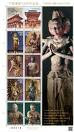
Stamps with Buddha Statues

仏像がデザインされた切手


Look at all the photos HERE
source : jooko/buddha


. . . CLICK here for more Photos !
仏像切手

:::::::::::::::::::::::::::::::::::::::::::::::::::::::::::::::::::::::::::::::::::::::::::::::::::::


. Maya Bunin 摩耶夫人 and temple visit  


:::::::::::::::::::::::::::::::::::::::::::::::::::::::::::::::::::::::::::::::::::::::::::::::::::::


バーミヤーンの大仏の切手
Buddha from Bamiyan


. . . . .


This stamp pattern has been used to make T-Shirts in Japan.
Tシャツのデザイン
source : yosukenaito.blog


.................................................................................


Heroes from the "Journey to the West"
Saiyuki 西遊記


source : blog.kunio


Journey to the West
(simplified Chinese: 西游记; traditional Chinese: 西遊記; pinyin: Xī Yóu Jì; Wade–Giles: Hsi-yu chi) is one of the Four Great Classical Novels of Chinese literature.
Originally published anonymously in the 1590s during the Ming Dynasty, its authorship has been ascribed to the scholar Wu Cheng'en since the 20th century. In English-speaking countries, the tale is also often known simply as Monkey.
This was one title used for a popular, abridged translation by Arthur Waley.
© More in the WIKIPEDIA !


::::::::::::::::::::::::::::::::::::::::::::::::::::::::::::::::::::::::::::::::::::::::::::::::::::: 

H A I K U


切手が伝える仏像 意匠と歴史


travel the world
with Buddha stamps -
letter writing in spring

Gabi Greve


.................................................................................


following Buddha -
every journey begins
with the first step


. Buddha's Footprints ー Bussokuseki 仏足石


::::::::::::::::::::::::::::::::::::::::::::::::::::::::::::::::::::::::::::::::::::::::::::::::::::: 


Stamp Collection from my friend
Mark Schumacher

A TO Z PHOTO DICTIONARY OF
JAPANESE SCULPTURE & ART


A special set
平城遷都1300年記念


Dokomo Butsu
in the mail
sun rain snow or hail

This is a play on the US post office motto:
"Come sun, rain, sleet, snow or hail,
the postman always delivers your mail."


. . . . . Thank you, Mark dono!


docomo is the name of a Japanese service for mobile phones.
But read Mark's comment, it was ment in a different meaning.

::::::::::::::::::::::::::::::::::::::::::::::::::::::::::::::::::::::::::::::::::::::::::::::::::::: 


. Japanese Stamps with Haiku    

. Japanese Stamps with Folk Toys    


[ . BACK to WORLDKIGO  TOP . ]
[ . BACK to DARUMA MUSEUM TOP . ]

:::::::::::::::::::::::::::::::::::::::::::::::::::::::::::::::::::::::::::::::::::::::::::::::::::::

11/12/2006

Ichiboku Exhibition

[ . BACK to DARUMA MUSEUM TOP . ]
::::::::::::::::::::::::::::::::::::::::::::::::::::::::::::::::::::::::::::::::::::::::::::::::::::: 
Spirits of Wood

Tokyo National Museum shows Buddhist masterpieces

「仏像 一木にこめられた祈り」
Shaping Faith ― Japanese Ichiboku Buddhist Statues

*Read the Original here, with photos*
(c) The Japan Times, Nov. 9, 2006
http://search.japantimes.co.jp/mail/fa20061109a2.html


Living in a land still largely covered with forest, it is not surprising that Japanese have a special reverence toward wood. We see this particularly in traditional architecture, where wood is not only chosen to reveal its best qualities, but is largely left unpainted so that its beauty improves
with use and age.

*Ichiboku *-- carving from a single block of wood -- is thought to have developed in Japan under the instruction of the Chinese priest Jian Zhen (688-763) during the production of numerous images for the Toshodaiji Temple in Nara Prefecture. Ichiboku carving soon replaced the bronze, earthenware and lacquer that had been used to make earlier religious statues, and it became the dominant process for the manufacture of Buddhist images until the middle of the Heian Period (794-1185).

*"Shaping Faith,"* an exhibition of ichiboku carving at the Tokyo National Museum Heisei-kan, displays the finest examples of the art form from the seventh until the 19th century, borrowed from temples around Japan. Most are of Bodhisattvas or various guardian deities who are usually trampling on some grimacing demon who dared to challenge Buddhist teachings.

The Japanese have believed since ancient times, as part of the Shinto religion, that spirits and gods are housed in trees and timber, as they are in all things. Looking at the fine examples shown in the first part of this exhibition, it seems that the divinity of the image is underscored with the power inherent in the material itself.

The earliest example is a small statue of the 11-Headed Kannon -- a Bodhisattva or enlightened deity -- that chooses to remain on Earth to help mortals on their own path to enlightenment, and symbolizes wisdom and compassion. It was finely carved from a block of tropical sandalwood and brought to Japan from Chang-An (present-day Xi'an), the capital of Tang-Dynasty China, by a member of a religious exchange mission.


東京国立博物館蔵. Tokyo National Museum

Sandalwood was treasured for its fragrance and its dense, close grain, which makes it most suitable for detailed carving. The statue's face shows very Indian-looking features with large, hooded eyes and a prominent nose, and was modeled on statues brought to China from the subcontinent by Buddhist priests. Many similar images were subsequently made in the Nara area with gradually larger dimensions and faces that became more and more Japanese in appearance. There were almost no local supplies of sandalwood, so native camphor, and later *kaya *(Japanese yew) and other dense-grained woods, were used instead.

One Buddha from the Todaiji Temple in Nara is portrayed in one of his manifestations as the Miroku Nyorai -- the "Buddha of the Future." This seated image wears the simple robe of a monk and has the double-crowned head of tight curls that we associate with the enlightened. His face, however, is otherworldly, quite unlike that of any human, and reflects his special status as a messiah-like deity scheduled to return to Earth in the distant future to save any leftover sentient beings that haven't, by that time, achieved enlightenment.

During the Heian Period, an extraordinary sculptural departure from standard techniques appeared in areas remote at the time from the capital, such as the present-day prefectures of Toyama and Aichi. Many statues from these rural temples are characterized by having been finished with *natabori* -- chiseled, repeated hatchet marks -- horizontally aligned over the surface of the finished image. Apart from being strangely modern in appearance, an uncanny, lifelike effect is caused by the changing light as it falls on the multiple marks.

One of these hatchet-carved statues represents the Zen Priest Houshi, (Baozhi from China, circa 418-514), who is famed for his powers of transformation; his face is split vertically to reveal the emerging Kannon Bodhisattva. This is a truly haunting image, testimony to the deep faith, rich imagination and artistic skill of 11th-century woodcarvers and, by itself, more than worth a visit. (Photo see below.)

The last part of the exhibition is devoted to the works of the much later, Edo Period carvers, Enku (1632-95) and Mokujiki (1718-1810) that show a complete departure from any other religious imagery. The period saw the appearance of eccentric creativity in painting and calligraphy, perhaps inspired and protected by the vibrant merchant culture that was eclipsing that of the courtiers, warlords and samurai. With this background in mind it is easier to understand the emergence of these two unusual sculptors.


岐阜・高賀神社蔵 Enku Statues

Enku traveled around the mountainous areas of central Japan as a pilgrim or wandering ascetic, carving for temples in exchange for food and lodging. His images were roughly hewn from whatever wood was available -- often splitting a log into three vertical sections to form the basic shape of each statue.
Much of his carving approaches the abstract, with form being defined by rough ax strokes, and facial features of eyes, nose and mouth merely hinted at with hatchet marks. The details of hands and feet were often ignored, and all are executed in plain, unfinished wood.

Enku's works make no effort to hide that they are born of poverty. Yet they reflect a powerful spirituality on a human scale that simple rural folk would feel and understand.

*Mokujiki,* too, was a wandering hermit, but his works are markedly different from those of Enku in being clearly carved and well-finished. His sculptures are unique for the variety of faces he employed for depicting various deities, each rounded in shape, large-eyed, and mostly smiling or grimacing. The aloof serenity that we normally associate with Buddhist images is abandoned here for much more human expression. Though smoothly polished, the broad chisel marks are evident and devoid of surface color or gilding so that one feels their essential "woodiness."

An outstanding group of 33 figures from the Kokuriyama Mokujiki Kannondo Temple in Niigata show the large, central Nyoirin Kannon surrounded by smaller manifestations of the same deity. All have such expressive, almost cartoonlike faces that they might lead us to ponder where the roots of modern-day *anime* might lie.


新潟・小栗山木喰観音堂蔵. Mokujiki

All the images shown are of Buddhist figures -- except for a 10th-century statue of a seated male deity from the Futagami Imizu Shrine in Toyama Prefecture. This figure from the ancient, native Shinto pantheon exudes that profound respect for nature's mysteries so close to raditional Japanese rice-growing society -- and acutely felt even today.

No wonder *matsuri* festivals are still boisterously celebrated all over Japan to invoke the benevolence of myriad local deities. The Japanese well sense the power and life force of trees that seem to be imbued in these statues, underscoring the teachings that they symbolize.
www.butsuzo.jp


Look at more photos here !

(c) The Japan Times, Nov. 9, 2006

******************************************************


*Daruma Museum, Enku and Mokujiki Buddha Statues*

:::::::::::::::::::::::::::::::::::::::::::::::::::::::::::::::::::::::::::::::::::::::::::::::::::::


宝誌和尚立像 Priest Hooshi


平安時代・11世紀/像高159cm
京都・西住寺 . 重要文化財

:::::::::::::::::::::::::::::::::::::::::::::::::::::::::::::::::::::::::::::::::::::::::::::::::::::


first winter wind -
warm smiling Buddha
merciful hands

First winter wind greeting from Japan
Etsuko Yanagibori

:::::::::::::::::::::::::::::::::::::::::::::::::::::::::::::::::::::::::::::::::::::::::::::::::::::

仏教を信仰した国の中で、日本ほど木で仏像を造ることにこだわった国はありません。

 飛鳥時代から奈良時代にかけて、日本の仏像は金銅仏や乾漆像、塑像が主流でした。しかし、奈良時代後半頃から一本の木材からできるだけ像の主要部分を造り出す一木彫が盛んに造立されるようになると、それ以降、日本では仏像の大半が木で造られるようになります。本展では、日本人がこだわった木で仏像を造ることの意味を考えるとともに、そこで培われた良質な木の文化を通して日本人の心や精神性に触れます。

 展覧会は、「檀像の世界」、「一木彫の世紀」、「鉈彫」、「円空と木喰」という四つのテーマを通して、その底流に脈々と流れる日本人が木と仏に託した祈りの世界を浮かび上がらせます。

 出品作品は146体でいずれも名品揃い。特に会期の後半(11月7日~12月3日)に展示される滋賀・向源寺の国宝十一面観音菩薩立像(渡岸寺観音堂所在)は今回、寺外初公開の作品です。その姿の美しさから白洲正子、井上靖、土門拳、水上勉ら多くの人々の心を魅了してきた像として知られています。ぜひ仏像が作り出す平和で静謐な世界をご期待下さい。

特別展 仏像 一木とは  木彫像の中で、一本の木で造られた技法の像を一木彫(いちぼくちょう)と呼びます。多くが仏教彫刻の場合において用いられます。一木造は頭部や体部の主な部分を通して一本の木から彫り出す技法ですが、その内容には幅があります。頭部と体部の主な部分のみを一木から造り、その他の部分(両肩から先、坐像ならば脚部など)は別に造っているものから、手、本体から遊離する天衣の部分、さらに台座の一部までを本体と同じ一木から彫り出すものまであります。

 また、頭髪や体部などの一部に木屎漆(こくそうるし)(漆に小麦粉を混ぜた麦漆に木粉や植物繊維を加えて練ったもの)を用いるものもあり、表面の仕上げも白木のままとするもの、彩色を施すもの、漆箔(しっぱく)を施すものなど様々です。

 一木彫の場合、最も問題となるのは、干割れが生じやすいということです。使用される木材には、あらかじめ木の心(木心、年輪の中心部分)を外しているものと木心を含んでいるものとがありますが、後者の場合は特に干割れの危険性が高いです。

 それを解消するために行われるのが内刳りです。内刳りとは、通常は像の背面から、(坐像の場合はさらに像の底からも刳りを施して木心を除去することをいいます。)干割れ防止の他にも、像の軽量化を図れるという効果があります。ただし、像によっては像内に木心があっても内刳りが施されていない場合もあり、それを行うか行わないかは素材の特性を見極めながら判断されていたようです。

 一木彫の造形は、木の表面から内側に彫り進むことによって決定されるために、一度削ったら修正は不可能です。結果的に、細部の破綻が全体に及ぶ危険性があり、制作者は常に細部から全体へ、全体から細部へと目を配りながら仕事を進めていく必要があります。つまり、制作者と素材である木には常に緊張関係にあり、そこには、一刀、一刀精神をこめて彫り進む真剣勝負の世界が展開していたに違いありません。一木彫の中に、時代を超えて現代の人々の心を揺さぶる名品が多いのは、こうしたことに起因しているといえるのではないでしょうか。

© http://event.yomiuri.co.jp/2006/butsuzo/about.htm

::::::::::::::::::::::::::::::::::::::::::::::::::::::::::::::::::::::::::::::::::::::::::::::::::::: 

[ . BACK to WORLDKIGO . TOP . ]
[ . BACK to DARUMA MUSEUM TOP . ]

:::::::::::::::::::::::::::::::::::::::::::::::::::::::::::::::::::::::::::::::::::::::::::::::::::::

10/07/2006

Oohirayama Kurayoshi

[ . BACK to DARUMA MUSEUM TOP . ]
::::::::::::::::::::::::::::::::::::::::::::::::::::::::::::::::::::::::::::::::::::::::::::::::::::: 

Oohirayama, Temple Konpira-In 大平山 金毘羅院
Ohirayama
This small temple in Kurayoshi is famous for the statue of a Kannon Bosatsu which prevents dementia in the elderly. It is of course becoming more and more important in present-day Japan. The old priest told me that even folk from Hokkaido come visiting here to pray for their old age.


Here is the original statue in the temple garden.


Look at the photos from here . . .


The Kannon Statue with 1000 Arms 千手観音
Look at the details HERE !


Fudo Myo-O Statue to throw water at. Mizukake Fudo !!


We even found a Daruma Talisman


:::::::::::::::::::::::::::::::::::::::::::::::::::::::::::::::::::::::::::::::::::::::::::::::::::::

法話と祈祷の寺です。また、ぼけ封じ三十三観音霊場二十番礼所として各地よりご参拝頂いております。
TEL: 0858-26-1526
住所: 鳥取県倉吉市上井1-1

The main statue is Konpira Daigongen.


Homepage of the temple
source : konpirain/index.php


. Konpira Daigongen . 金毘羅大権現.


::::::::::::::::::::::::::::::::::::::::::::::::::::::::::::::::::::::::::::::::::::::::::::::::::::: 

. Mitoku San, Temple Sanbutsu-Ji 三徳山三仏寺 .


. Folk Toys from Tottori .


[ . BACK to DARUMA MUSEUM TOP . ]
[ . BACK to WORLDKIGO . TOP . ]

:::::::::::::::::::::::::::::::::::::::::::::::::::::::::::::::::::::::::::::::::::::::::::::::::::::